Five Saudi Shorts and a Festival That Rewards Quiet Attention
At Riyadh’s Ibero-American Film Festival, the most interesting exchange is not between institutions but between local stories of memory and belonging.

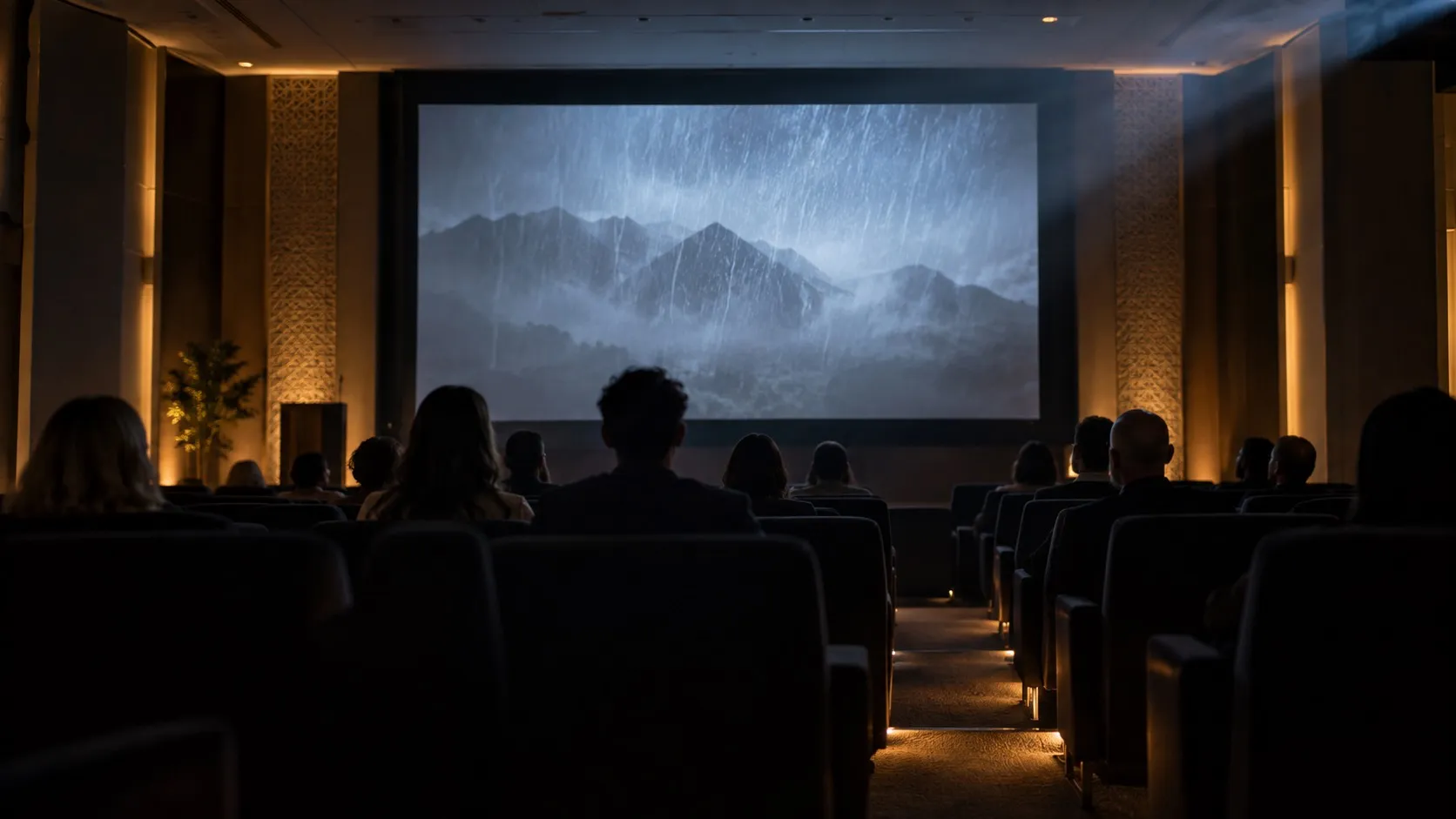
A festival built for listening
In the synopsis of The Fog of Gunpowder, rain hangs over the highlands of Al-Namas. Men from two generations rehearse the Medqal after a thirty-year absence, while family memory enters the film through a grandfather’s recollections and rare archive filmed by an uncle. That is already a strong opening image: not a grand cultural statement, but a return handled with care. The film’s own description frames it as a work about revival, inheritance and the fear of becoming the generation that forgets The Fog of Gunpowder.
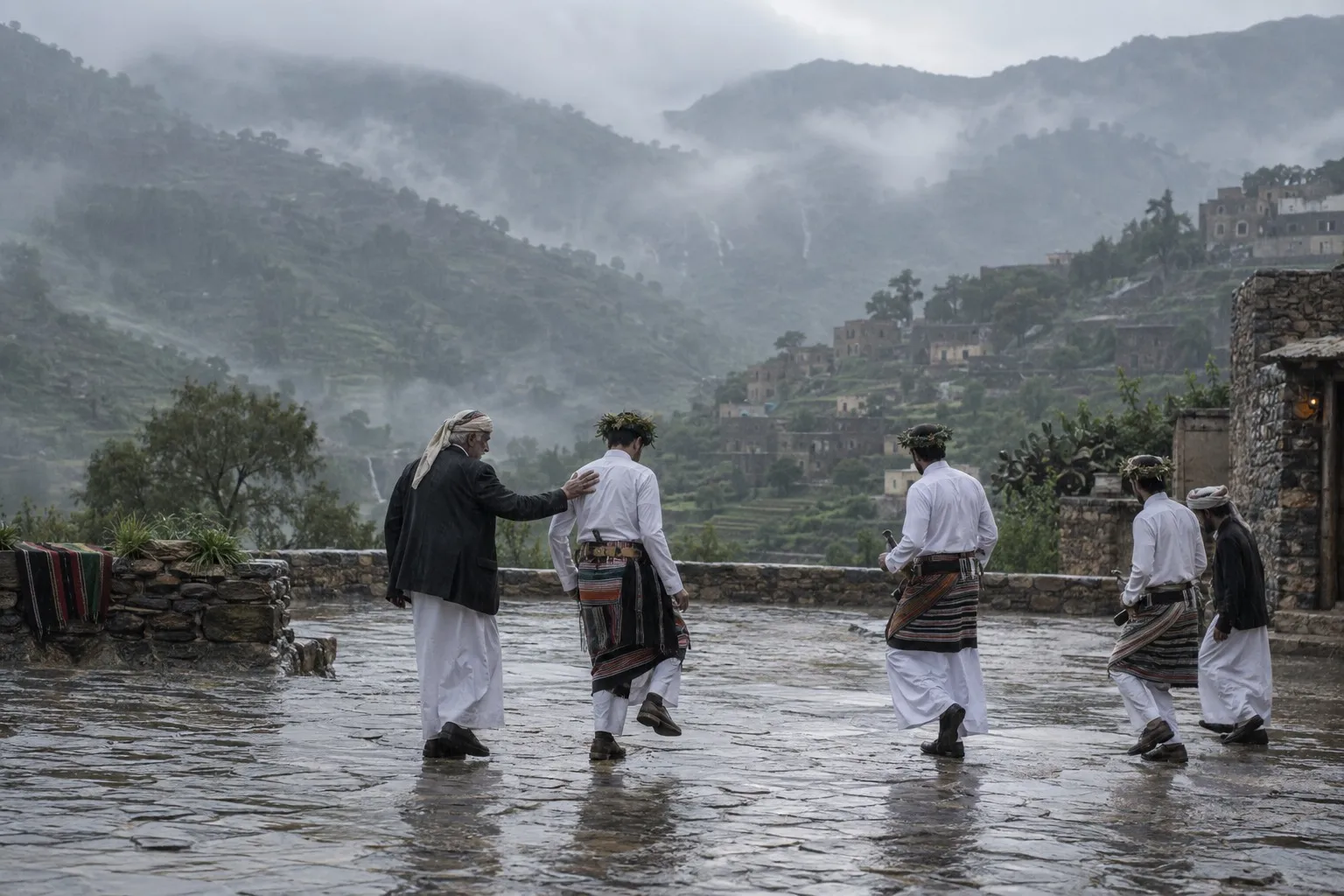 An editorial illustration evoking intergenerational memory in the rainy highlands of Al-Namas; not a film still or event photograph.
That tone feels apt for the 5th Ibero-American International Film Festival in Riyadh, which is running from 20 September to 8 October 2026 at the Embassy of India auditorium according to Arab News. The setting lends the festival a deliberate scale. It does not announce itself as a spectacle. It invites a more modest kind of attention, well suited to cinema that depends on nuance.
The festival’s opening pairing also says something useful. Machuca, the Chilean historical drama, opened alongside The Fog of Gunpowder. On paper, that is a simple programming choice. In practice, it creates a quiet form of comparison: one film about political and social memory in Chile, another about cultural remembrance in Saudi Arabia. The link is not sameness. It is recognition without confusion.
What the Saudi programme contributes
Five Saudi shorts are being presented through the Saudi Cinema Association’s On Our Screen, We Meet programme: The Fog of Gunpowder by Saad Tahaitah; Astar (Lines) by Rawan Hassan and Sarah Al-Masri; Coop by Mujtaba Zaki Alhejji; Sweet and Sour by Ahmed Al-Hasawi; and The Aquarium by Reema Al-Majed.
Two offer particularly clear ways into the question of how local stories travel. The Fog of Gunpowder begins with collective memory; Coop begins with the social world of childhood. For Coop, the synopsis describes a boy named Adam who accidentally bursts a football and then takes an unexpected risk in a market to earn enough for a replacement and regain his teammates’ trust CineFoot lists the film here. It is a small premise, but it carries a clear social charge. The story turns on something simple and recognisable: the pressure to belong, the embarrassment of making a mistake, and the lengths a child will go to repair trust.
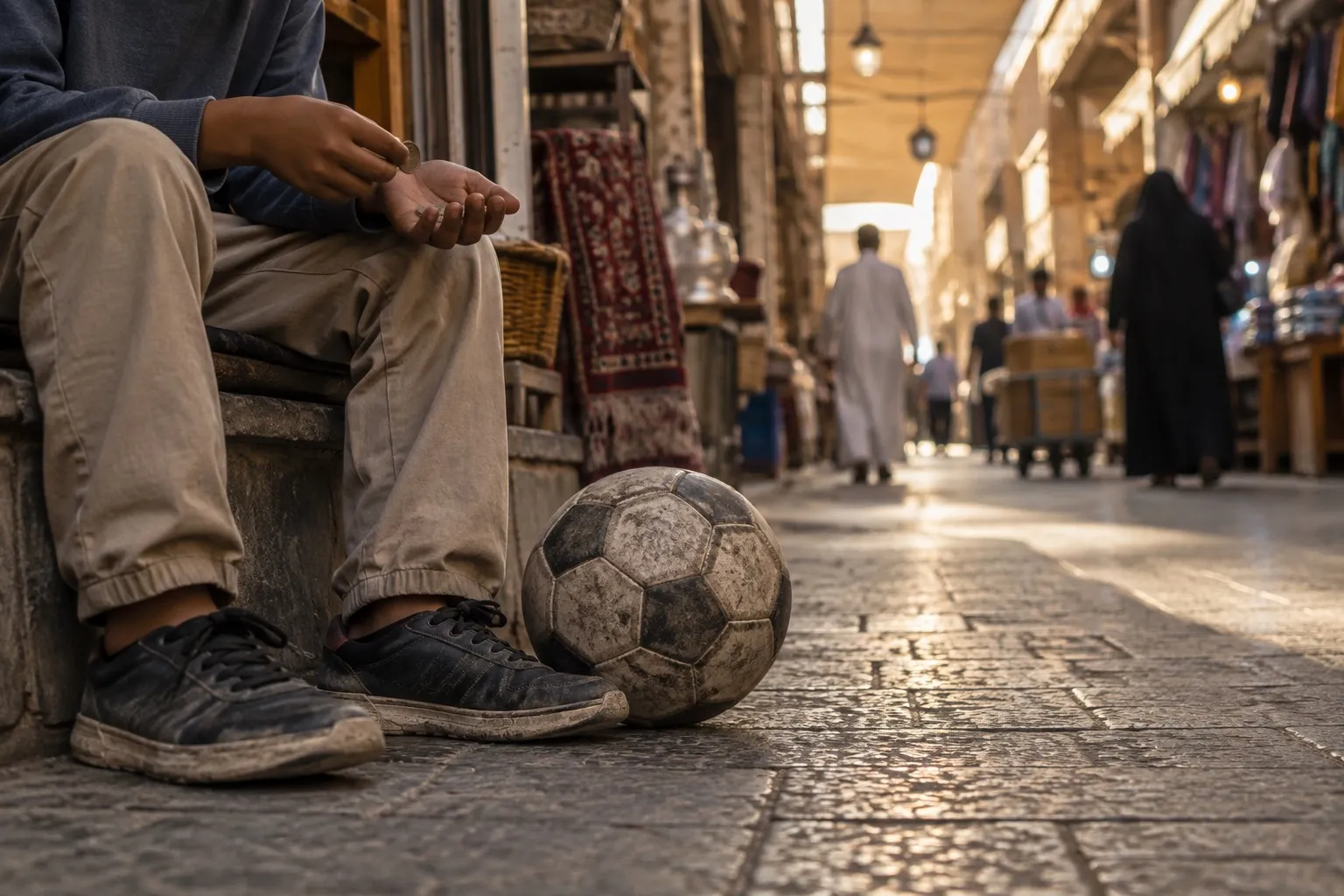 An editorial illustration inspired by the premise of Coop: childhood, repair and belonging; not a film still.
These two films are different in form and scale, yet they share a useful quality. Each makes meaning out of a contained world. One reaches into family archive and collective ritual. The other follows a child through a local errand shaped by peer belonging. Neither needs to be inflated to matter. Short films do not have to behave like miniature features. They can stay close to a single problem, a single memory, a single exchange, and still open outward.
The value of the small room
That is why the festival setting matters almost as much as the programme. Embassy-hosted screenings can be easy to dismiss as ceremonial, but that misses their real strength. They create conditions for attention. They make room for films to speak without being drowned out by scale.
Mexico’s official account of the 2024 edition is a helpful precedent here: it described 11 diplomatic missions screening films in the Embassy of India auditorium and noted that the Mexican screening drew more than 120 people the embassy’s own account is here. That is not mass culture. It is intimate public culture. The difference matters.
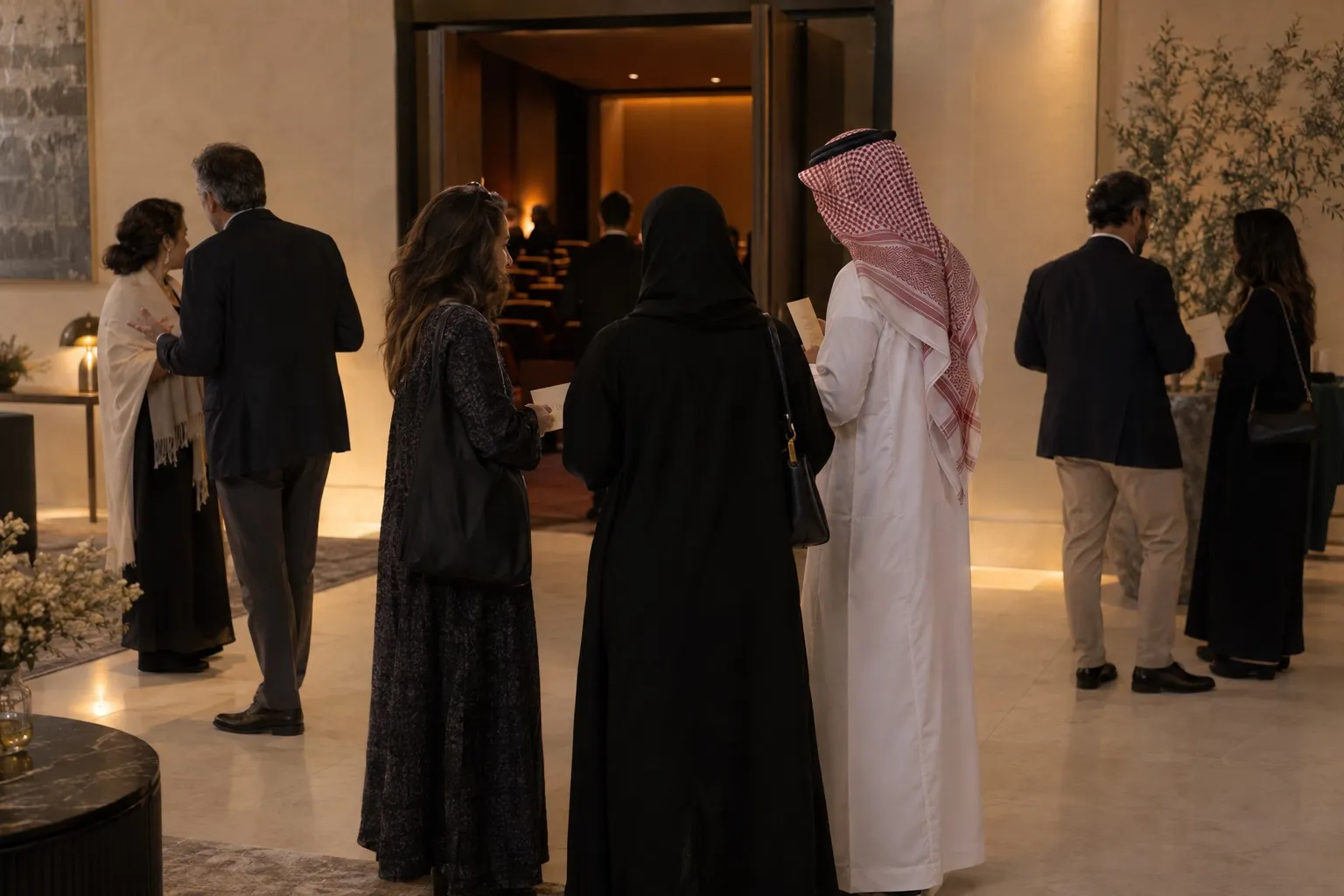 An editorial illustration of the quiet exchange around a small cinema screening; not a festival photograph.
In a city where cultural life is often discussed through large gatherings, major venues and high-visibility launches, a festival like this suggests another measure of confidence. It is not only about what can fill a hall. It is also about what can be held carefully in a smaller one. That, to me, is one of the more interesting signs of cultural maturity: the ability to sustain modest, well-curated exchange without turning it into a performance of scale.
The same applies to the Saudi shorts in this programme. Their significance is not that they declare a single national story. It is that they enter a wider conversation with enough specificity to stand on their own. A documentary rooted in the rain of Al-Namas and a childhood fiction about a football in a market may seem far apart, but both are legible beyond their immediate settings. They travel because they remain particular.
Recognition without confusion
That is the phrase that keeps returning to me: recognition without confusion. It describes the best kind of cultural exchange. A viewer can meet a film from another place and feel that something in it is familiar, without flattening what makes it distinct.
That is also why short-form cinema is such a strong fit for a festival like this. It does not demand that the audience settle in for a complete national survey. It offers a more precise encounter. It asks for readiness, not endurance. And in return, it can reveal how much is carried in a few minutes: a ritual revival, a family archive, a child’s mistake, a market transaction, a gesture of repair.
I think that is what makes this festival worth paying attention to now. Not because it is large, but because it is measured. Not because it tries to announce a new era, but because it makes space for stories to meet each other properly.
If Riyadh’s cultural confidence is increasingly visible, it may be because the city can now host exactly this kind of exchange: modest, specific, and assured enough not to need to explain itself too loudly.