The Quiet Rise of Saudi Specialty Coffee in Riyadh
Camel Step, Brew92 and Half Million show how Saudi coffee businesses can compete through craft, identity and consistency.

The next phase of Riyadh’s coffee boom
It is easy to read Riyadh’s crowded café map as a contest for the next opening. I think the more interesting question is what makes a customer return after the launch photographs stop circulating. International chains still offer recognition and convenience. Saudi roasters and café brands have room to offer something more specific: a bean selection, a roasting approach and a service culture people can come back for.
That is a plausible next phase for the city, though there is no public evidence here of a measured transfer of sales from international chains to local ones. The case rests on what Saudi operators are actually building, and on whether they can keep quality intact as they expand.
Why local brands are gaining attention
Specialty coffee has always rewarded detail. Customers who care about it tend to notice the roast profile, the bean origin, the consistency of the espresso, the training behind the pour and even the atmosphere of the space. That creates an opening for smaller operators, because they can often move faster, make sharper design choices and tell a more coherent story than larger, standardised brands.
In Riyadh, that opening is visible in brands such as Camel Step, which says it began in 2013 and places emphasis on Saudi specialty coffee knowledge, sourcing and national talent. It is also visible in Brew92, which describes itself as a KSA-based café and roastery founded in 2016 and lists an Al Imam outlet in Riyadh. Half Million is another useful reference point: it identifies itself as a Saudi F&B brand with a specialty roastery. None of these examples tells the same story, but together they show how local operators are building around craft, identity and repeatability rather than simply mimicking the international café template.
That distinction matters because Saudi-owned or locally roasted coffee does not automatically mean Saudi-grown coffee. The Saudi Coffee Company’s Jazan processing centre is part of an effort to strengthen domestic production and help farmers prepare beans for market; the company says it took over management of the facility in 2025. A Riyadh roaster working with imported green beans contributes a different kind of local value: selecting, roasting, brewing and explaining them. Both stories matter, but they should not be confused.
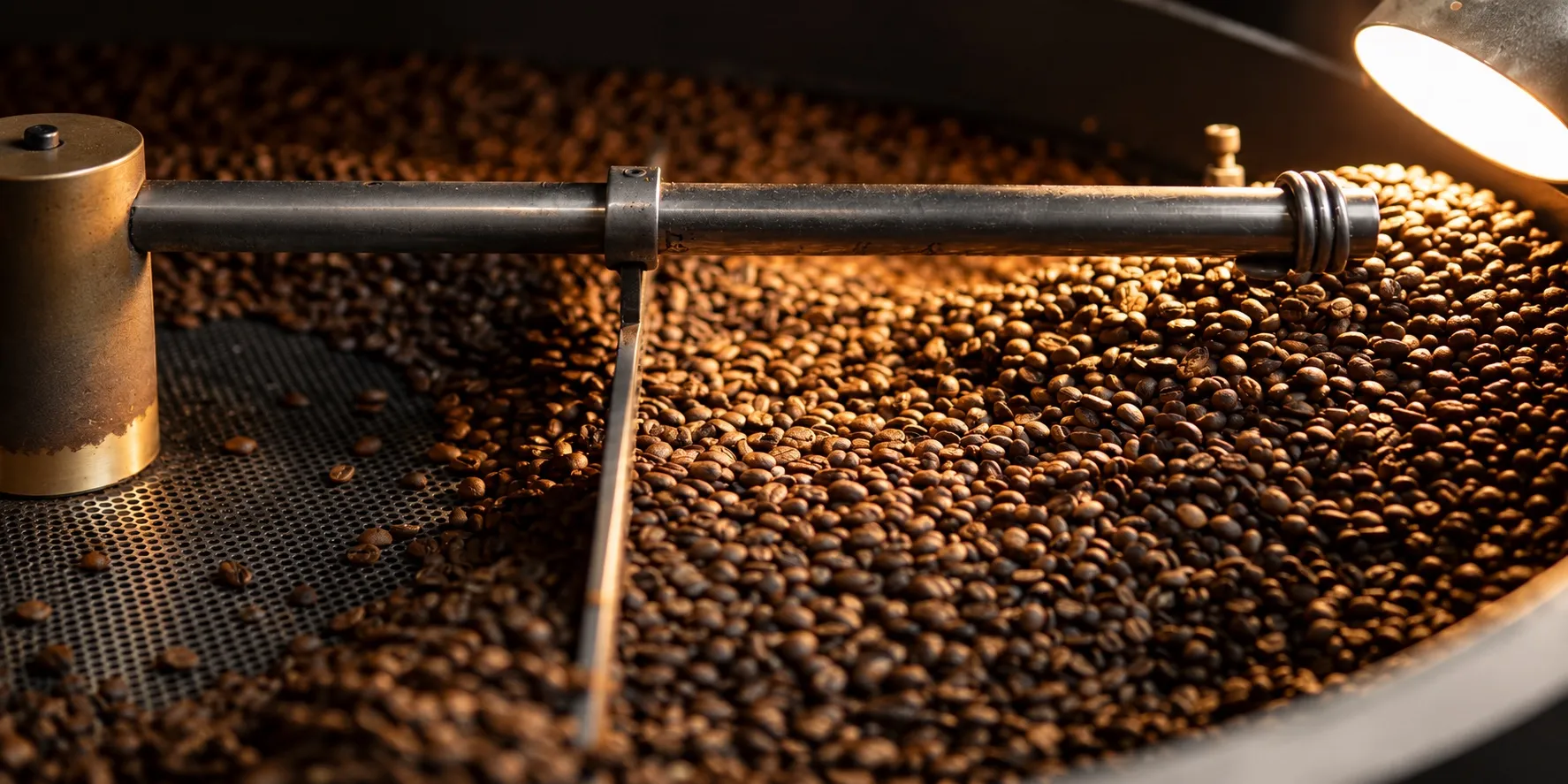 Roasting makes the origin choice visible in the cup. Illustrative photograph taken in Indianapolis: Scott Soltys-Curry / Unsplash; cropped and colour adjusted.
The move from status to discernment
For a long time, international chains carried a kind of status value. They were recognisable, easy to trust and convenient to discuss. That still matters, especially for visitors and for customers who want speed and familiarity. But in a market like Riyadh, where the café scene has become crowded and highly visible, status alone is no longer enough.
In specialty coffee’s engaged niche, origin, processing and brew method can give customers more to compare than a logo. I would not claim every café customer now chooses this way. The opportunity for a local roaster is to make those details understandable without turning a simple order into a lecture.
A neighborhood café can earn loyalty through familiarity; a roaster can earn it when a customer returns for the same bean or trusts the team to recommend a new one. Those are advantages to build, not automatic rewards for being local.
The role of storytelling
Coffee has become a storytelling category. That is true globally, but it is especially true in cities where the market is evolving quickly. A café is no longer only judged by the cup. It is judged by the name, the design, the service style, the sourcing language and the values it appears to represent.
Saudi specialty brands are increasingly using that to their advantage. Some lean into heritage and modernity at the same time. Some foreground craftsmanship and education. Others build an image around clean design, community and the idea of a contemporary Saudi lifestyle. The strongest brands usually do not try to over-explain themselves. They give customers enough texture to understand the proposition and enough quality to make the story believable.
That balance matters because consumers are quick to spot empty branding. If the coffee is inconsistent, the narrative falls apart. If the story is too polished but the experience feels routine, the brand loses credibility. In specialty coffee, the product still has to carry the argument.
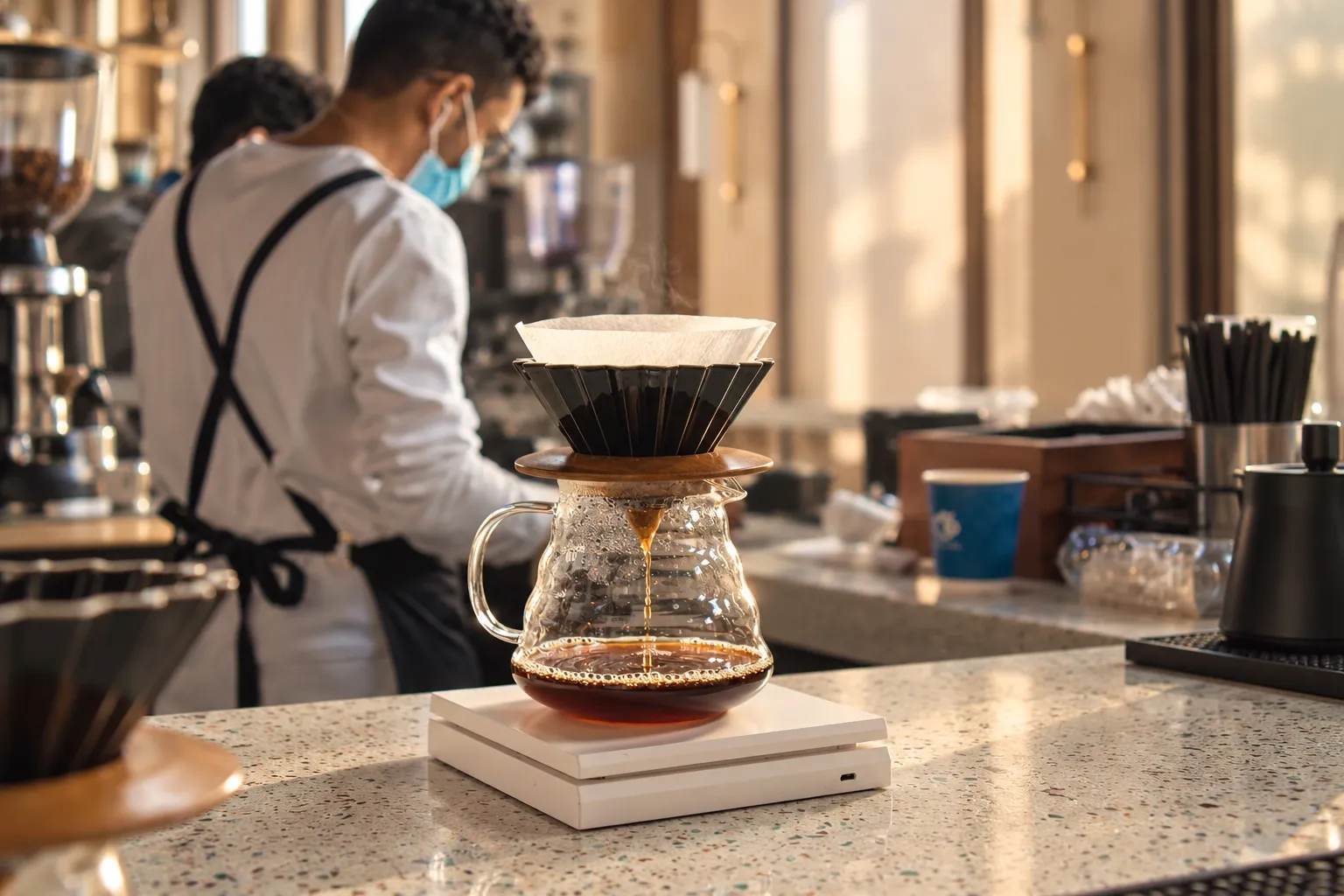 Pour-over coffee being prepared at a café in Jeddah. Photograph: Abdullah Gouiaa / Pexels; cropped and colour adjusted. The café is not identified as one of the brands discussed.
What local brands can compete on
The durable advantages for a Saudi specialty brand are practical:
- Training: a better-trained team can deliver a more consistent product and a more confident service experience.
- Origin transparency: when a brand can explain where its beans come from, what it is roasting and why, it earns trust.
- Repeatable quality: one excellent opening is not enough; the challenge is making the second and third locations feel just as disciplined.
- Identity: a clear point of view helps a brand stand out in a crowded café market.
Those strengths matter in Riyadh because the city’s café audience is exposed to a lot of choice. A local brand does not need to be everything to everyone. It needs to be sharp enough to give people a reason to return.
What could undermine the momentum
The opportunity is real, but so are the pressures. Specialty coffee is expensive to do well. Quality beans, trained baristas, well-maintained equipment, strong interiors and prime locations all add up quickly. Rent can be unforgiving, especially in prominent districts where cafés are expected to do more than sell coffee: they have to sustain footfall, fit the setting and justify their footprint.
Consistency is the other major test. A brand can look exciting in one branch and lose momentum if the next opening feels less disciplined. Scaling can also flatten what made the first location special in the first place. If a business grows too quickly, it can lose the sense of care and specificity that made people notice it.
I would also be cautious about assuming that every Saudi specialty brand is competing in the same way. A Riyadh café roasting imported beans is making a different business choice from a producer-linked operation such as the Jazan model farm and processing infrastructure. One is competing through hospitality, curation and roasting. The other is tied to the development of domestic coffee production. Both are relevant to the Saudi coffee story, but they should not be collapsed into a single narrative.
The test of a lasting coffee culture
To me, the potential here reaches beyond a cup. Saudi operators can connect local hospitality with the technical discipline of specialty coffee. The strongest sign of progress will be repeat visits and consistently good cups, rather than another round of photogenic openings.
International chains remain part of Riyadh’s routine. The opening for Saudi brands is to give customers a clear reason to choose them alongside that convenience: a transparent origin, a distinctive roast and a team that can deliver it reliably.
If they get that right, homegrown names can help shape what Riyadh’s coffee culture becomes next.
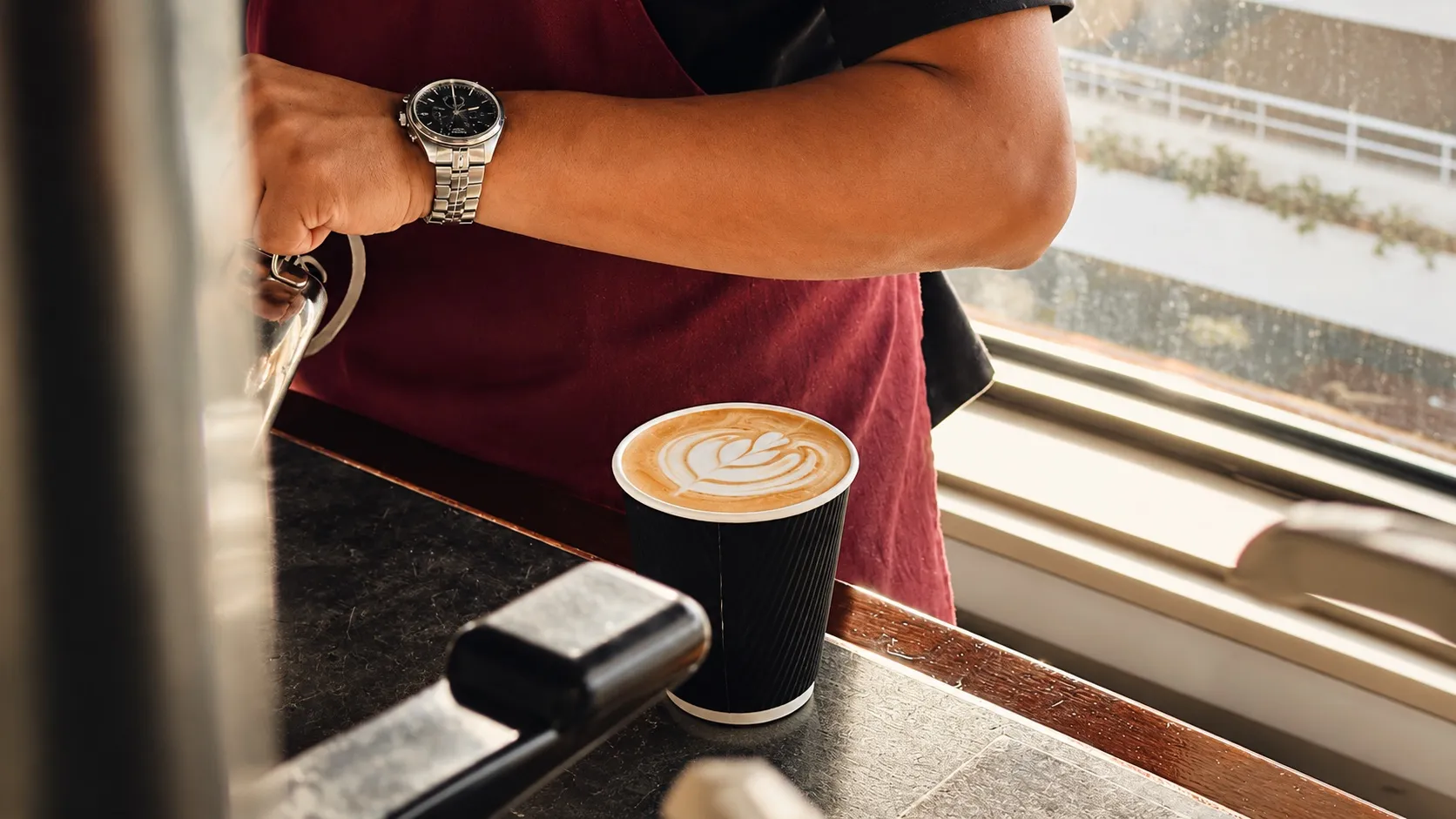
Hero photograph: Omar Al-Ghosson / Unsplash; cropped and colour adjusted.