Abu Dhabi’s Healthy Menu Rules and What SEHHI and Low-Sodium Salt Mean from October 1
Full enforcement begins on 1 October 2026. For hotels and guests, the bigger shift is towards wellness as part of everyday hospitality.

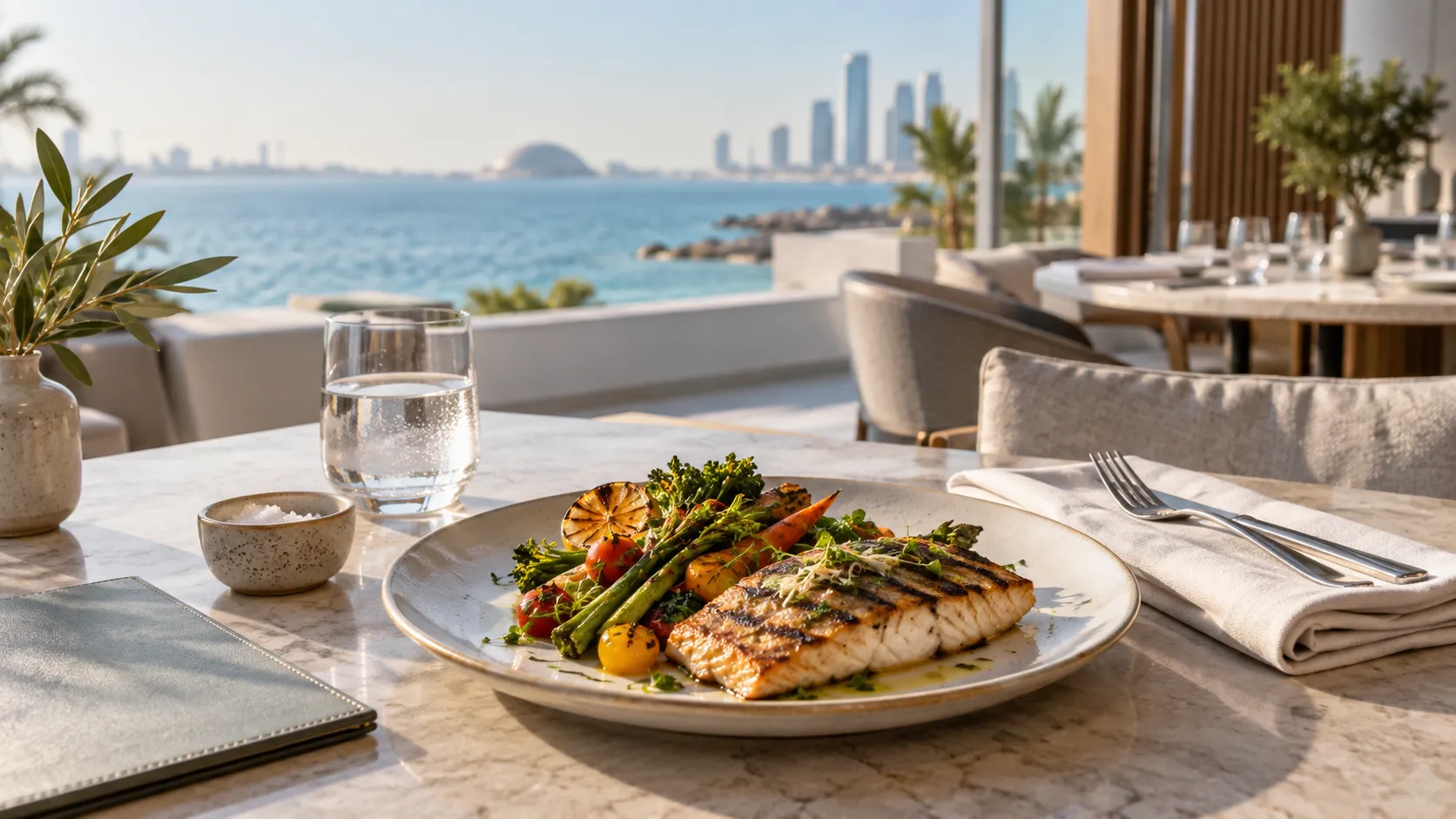
Imagine a guest sitting down in an Abu Dhabi hotel restaurant on 1 October 2026 and noticing the SEHHI logo beside some dishes. A small note identifies the salt on the table as potassium-enriched and lower in sodium. The rules now require at least one healthy adult choice in each menu category, at least half of children’s items to meet SEHHI, and lower-sodium potassium-enriched salt as the default after service.
That is the practical shape of the policy now reaching full enforcement. The rules were effective from 1 July with a three-month grace period under the Department of Culture and Tourism – Abu Dhabi’s (DCT Abu Dhabi) circulars 7 and 8 of 2026, and full enforcement begins on 1 October. The measures sit within a collaboration between DCT and Healthy Living, with SEHHI developed by the Abu Dhabi Public Health Centre.
The rules apply to DCT tourism-licensed food and beverage outlets, including hotel restaurants and room service, not every restaurant in Abu Dhabi. For me, the strategic signal is wellness-by-default: a healthier meal becomes an ordinary part of the stay, rather than a special request or a separate wellness package.
What SEHHI is actually measuring
SEHHI is a nutritional classification, not a label for food that merely looks healthy. The assessment looks at energy, fat, saturated fat, trans fat, sugar, salt and fibre. Recipe and portion size both matter.
That means a salad is not automatically certified, and a grilled dish is not automatically certified either. The ingredients, seasoning and serving size all have to line up with the standard. Qualifying dishes must carry the approved SEHHI logo. Every adult category counts, including starters, mains, sides and desserts.
For hotels, that creates a practical discipline: controlling recipes and portion sizes keeps the nutritional assessment accurate. Changes to previously approved dishes must be resubmitted for validation.
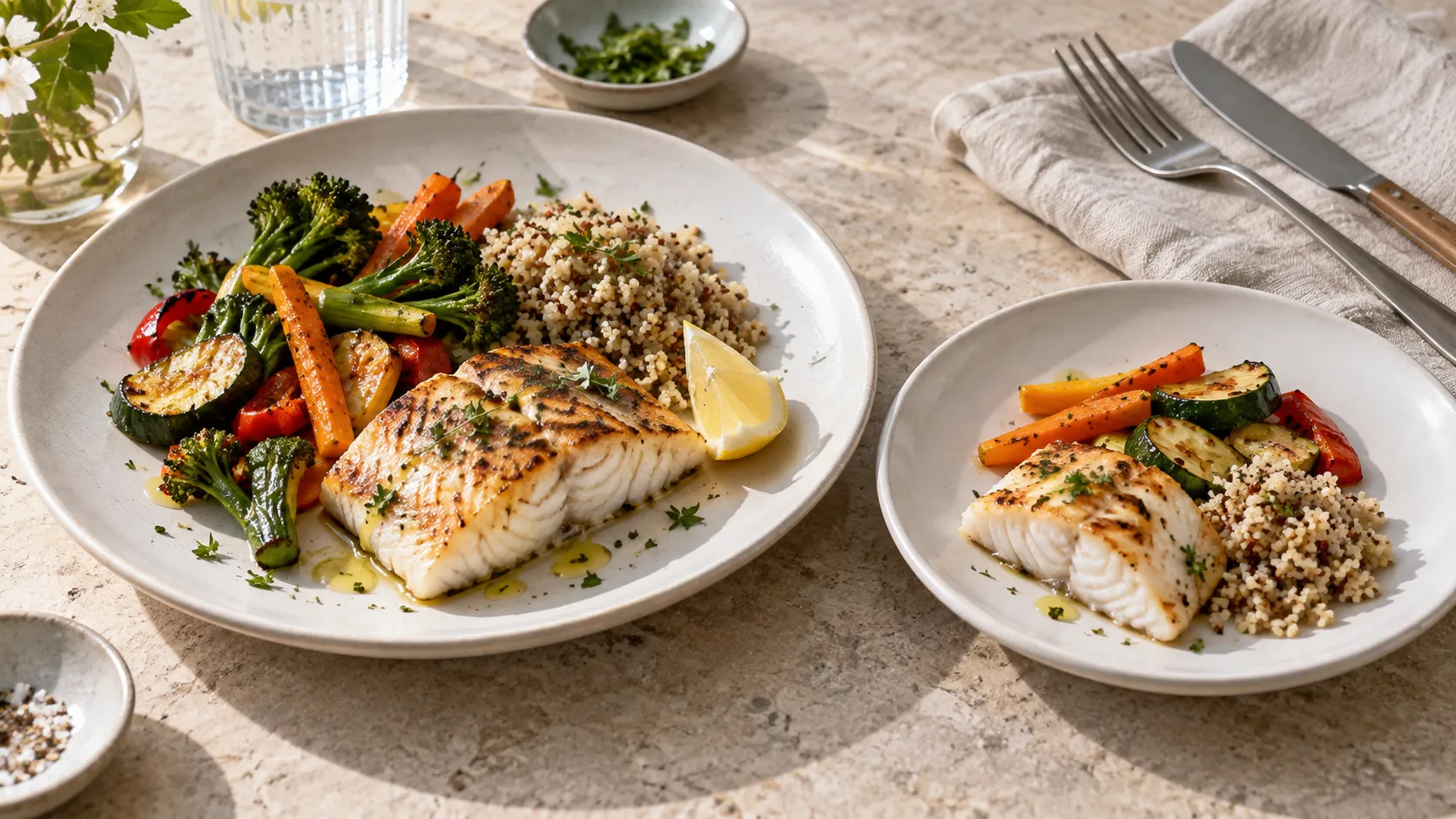 Illustrative adult and child portions; the pictured dishes have not been assessed for SEHHI classification.
Where the menu rules apply — and where they do not
The DCT circulars are precise, but they are not universal. They include exemptions for buffets without specific menus and for fixed tasting menus. Buffets are still expected to make reasonable healthy efforts.
The salt rule sits separately. The menu exemptions do not mean a salt exemption. If discretionary salt is provided after service, it must be lower-sodium potassium-enriched salt containing a minimum of 25% potassium chloride. That applies to shakers, sachets and staff-added salt after service.
There is no requirement to offer salt at all. Ordinary salt may still be supplied on an explicit, unprompted customer request. This is a post-service seasoning rule, not a requirement to replace every salt used in cooking.
Why this is more than a compliance exercise
The commercial issue is not simply whether a hotel can meet the rule. It is whether the hotel can meet it without making the dining room feel narrower or more defensive.
The best operators will treat this as menu engineering, staff training and procurement control at the same time. They will need:
- clear recipes that can be reproduced consistently,
- ingredient records that support the SEHHI classification,
- front-of-house teams that can explain the logo simply,
- procurement evidence for compliant salt.
The procurement point is narrow but important. If DCT asks for evidence, hotels need to show what salt they are buying and serving, not just say the table setup has changed.
Recipe trials, nutritional assessment, supplier checks and menu updates all take time and money. Kitchen training should cover measured seasoning, sauces and portioning, including what happens when an ingredient runs out. A cheaper substitute that changes the recipe can create more work later.
The cost response need not be a new premium ingredient list. Reviewing familiar dishes, cross-using ingredients and checking what guests actually order can help keep the offer manageable. The competitive opportunity is an appealing meal people reorder, not merely a logo they recognise.
 Consistent recipes and portions turn menu decisions into repeatable kitchen practice.
Consider a hypothetical grilled fish dish with vegetables. A hotel could adapt the same core ingredients into both an adult portion and a child portion, with documented recipes and appropriate portion sizes for ADPHC assessment. Shared ingredients may help reduce waste and make purchasing simpler, but they do not guarantee savings.
Now imagine a guest asking why the salt at the table is different. The server explains its lower-sodium, potassium-enriched composition without suggesting a switch. If the guest independently asks for ordinary salt, staff can provide it. Accurate service training makes that distinction easy to handle.
What guests are likely to notice
This change should not make dining feel moralising. Indulgence is still part of hospitality, and it should remain so. The point is not to remove choice; it is to widen the set of choices that are easy to find.
That matters for families, where children’s menus often feel like an afterthought. It also matters because regional and international diners come with different expectations. Some guests want lighter food. Others want richer dishes. Many want both across the same stay.
Ingredient transparency becomes central here. Guests do not need a lecture. They need to know what is in the dish, what the logo means and why a certain salt is being used. If the hotel can explain those things simply, the policy feels like service design rather than restriction.
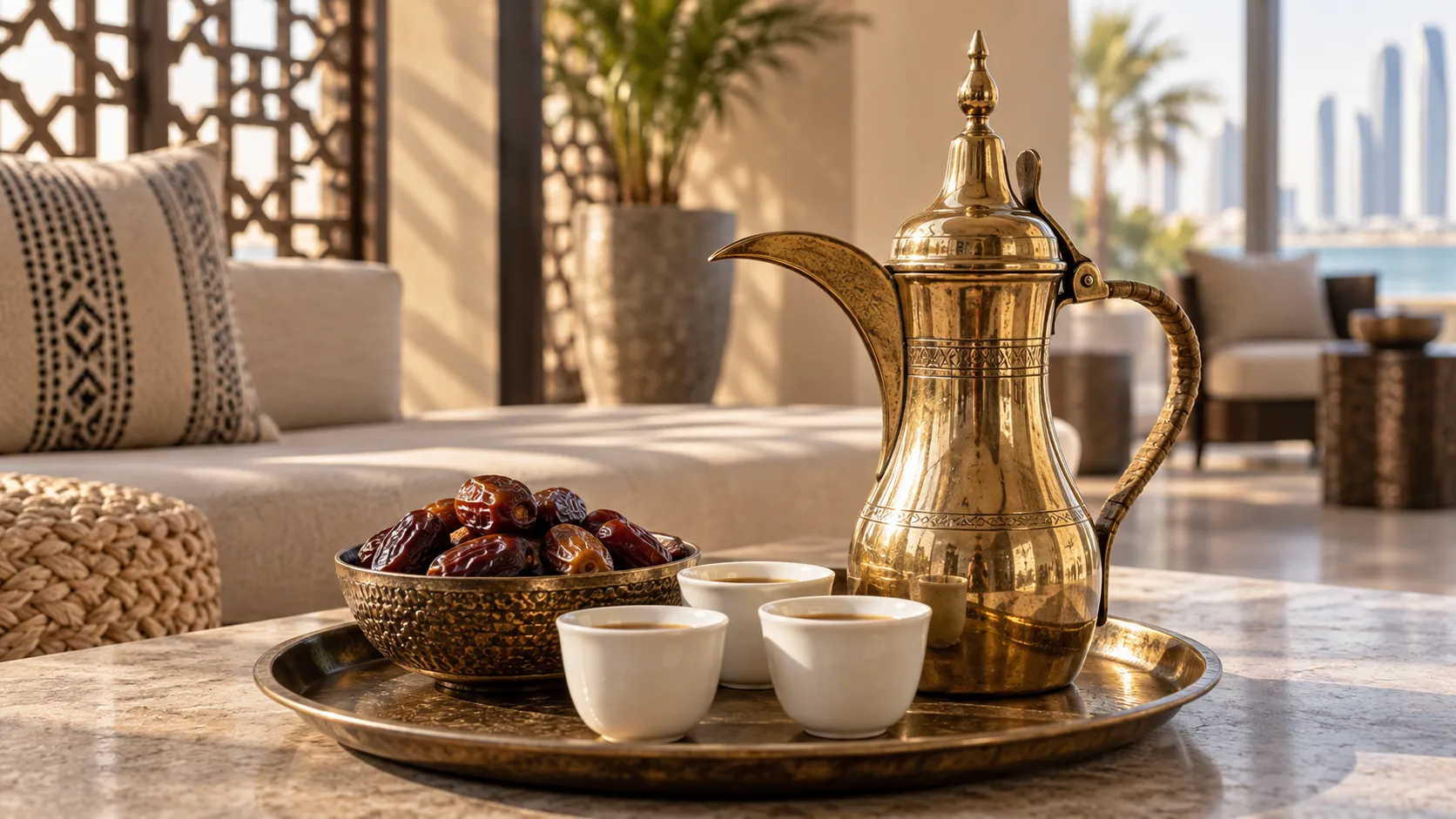 Coffee and dates connect the hotel welcome with Emirati hospitality traditions.
The bigger destination story
This is part of a wider Abu Dhabi hospitality strategy. DCT’s Tourism Strategy 2030 targets 39.3 million visitors and AED90 billion in tourism GDP contribution by 2030, so food and beverage is not a side issue. It is part of destination competitiveness.
The same logic sits behind the Emirati Dhiyafa Standards framework, whose official launch describes 65 standards across eight guest-journey stages, with full implementation planned for Q1 2027. Hotels have a minimum of 20 standards, split between 10 mandatory and 10 selected items, while hotel apartments have a minimum of 10, split 5 and 5. For hotels, guest-facing and F&B staff must be able to explain at least three Emirati dishes and their place in dining traditions. Coffee, locally sourced dates and the generosity and respect embodied in Al Sana’ connect the standards to everyday service.
The point is not that traditional food automatically qualifies for SEHHI. It does not. A heritage dish may still need recipe adjustment or a different portion size before it meets the nutritional standard. But the two frameworks clearly point in the same direction: wellness and cultural authenticity are becoming baseline expectations, not optional extras.
The recovery backdrop makes the timing sharper. Skift’s September reporting has pointed to uneven hospitality recovery and pressure on hotel performance, with event-led demand helping to offset a softer year-to-date picture. That is why operational discipline matters now. New standards are harder to absorb when margins are already under pressure.
What smart hotels should do now
The window is short: days before enforcement, and then ongoing reviews after that. Operators should confirm their assessment status with ADPHC, brief every shift and check dining-room and room-service salt supplies now.
The practical response is to work through the menu line by line. Which dishes already qualify? Which can be adapted with ingredient or portion changes? Which need to be replaced entirely?
Hotels that move early may benefit through better guest acceptance, stronger choice quality and more repeat custom. Those are potential benefits to test through sales, waste and guest feedback, rather than returns to assume.
Abu Dhabi is making healthier choices and a recognisably Emirati welcome part of the everyday hospitality offer. For the wider UAE industry, that is the signal worth watching: the next competitive advantage may be how thoughtfully a hotel delivers the basics.