Saudi Hospitality Is Becoming a Smart-Building Story
LG’s Riyadh Experience Zone points to a bigger shift: smart-home technology is moving from a consumer feature into the hospitality and real estate proposition.

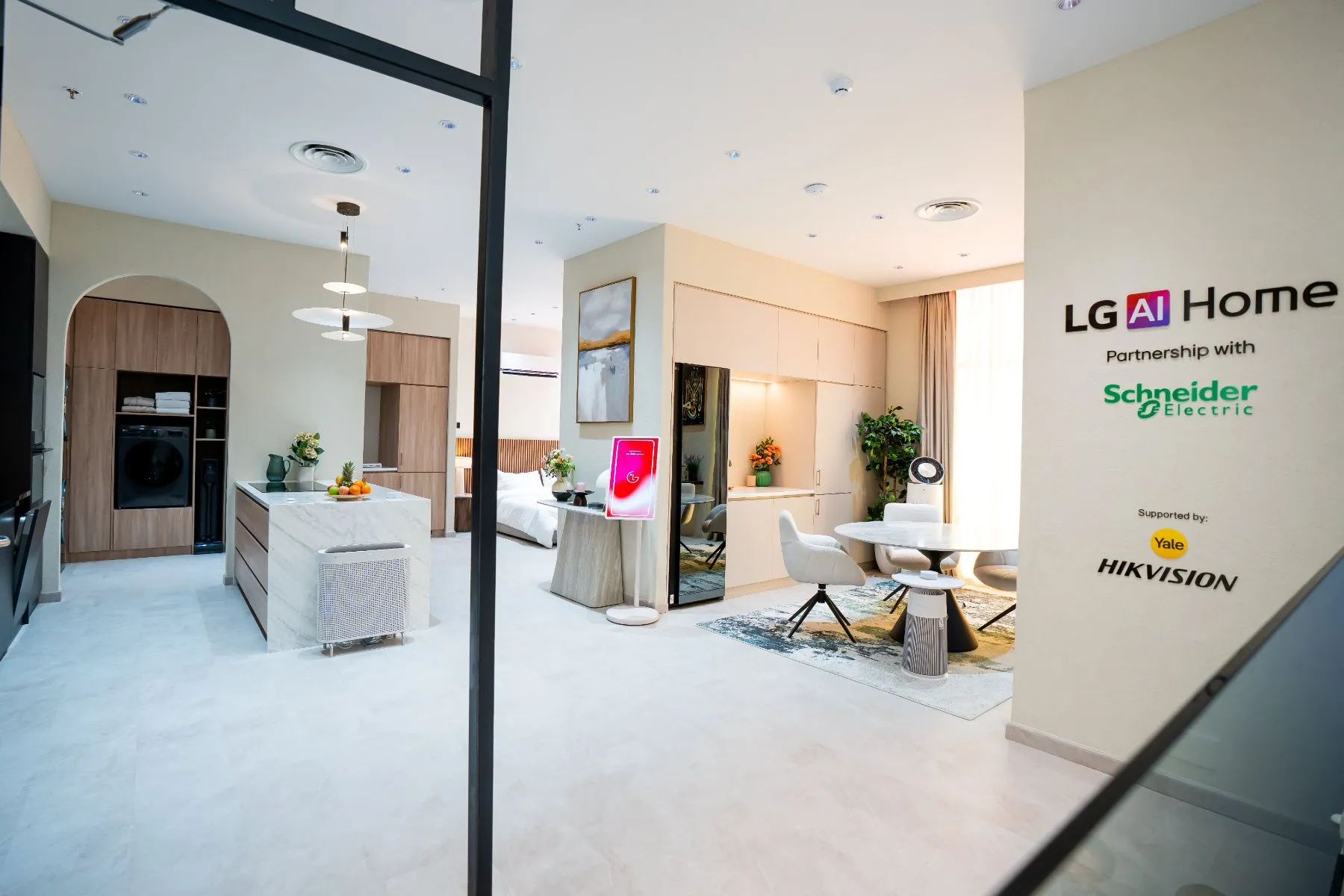
Smart living is no longer just a consumer feature
Connected technology is beginning to influence how hospitality and residential products are designed from the outset.
A connected appliance, a voice assistant or a remote-control app can improve convenience, but they still sit at the edge of the experience. What is emerging now is something more integrated: a stack of connected systems that can influence how a room, apartment or building behaves.
LG’s new AI Home Experience Zone in Riyadh is a useful example of this direction. The release makes the audience clear: it is aimed not only at homeowners, but also at real estate developers, hospitality operators and property managers. It presents a unified ecosystem that combines built-in appliances with smart-home infrastructure, which makes the B2B angle part of the announcement rather than an afterthought.
From smart devices to smart environments
The real distinction is between a collection of smart devices and a coherent building ecosystem.
A device-led approach is usually fragmented. One system handles cooling, another handles security, another manages appliances, and a separate app sits on top of all of it. That can still feel modern, but it rarely feels unified.
An integrated approach is more ambitious. If the same ecosystem can connect built-in appliances, AI control, energy management, security and intercom systems, then the technology stops being a layer added after the fact. It becomes part of the physical hospitality product.
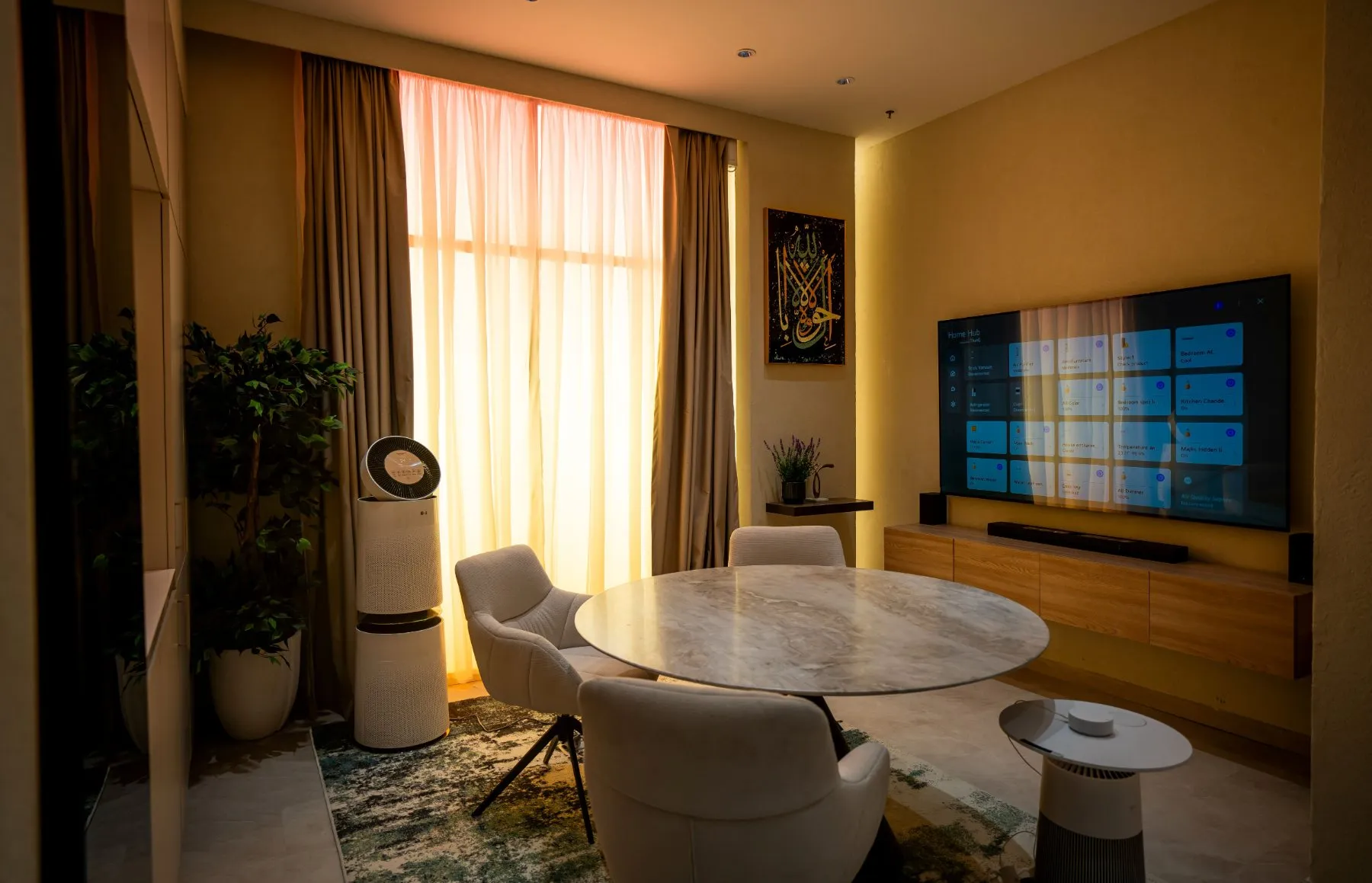 LG’s Riyadh AI Home Experience Zone demonstrates how connected devices and home systems can be managed through a unified smart-home interface.
“we are redefining what it means to live smart.”
— Jungho (Sunny) Kim, Managing Director, LG Saudi Arabia
That has real implications for the next generation of hotels, serviced residences and branded residential developments in Saudi Arabia. The value proposition may increasingly include:
- rooms and residences that adapt more intelligently to usage patterns
- climate and lighting that respond more naturally to guest behaviour
- energy systems that support both comfort and efficiency
- security and access that feel seamless rather than disruptive
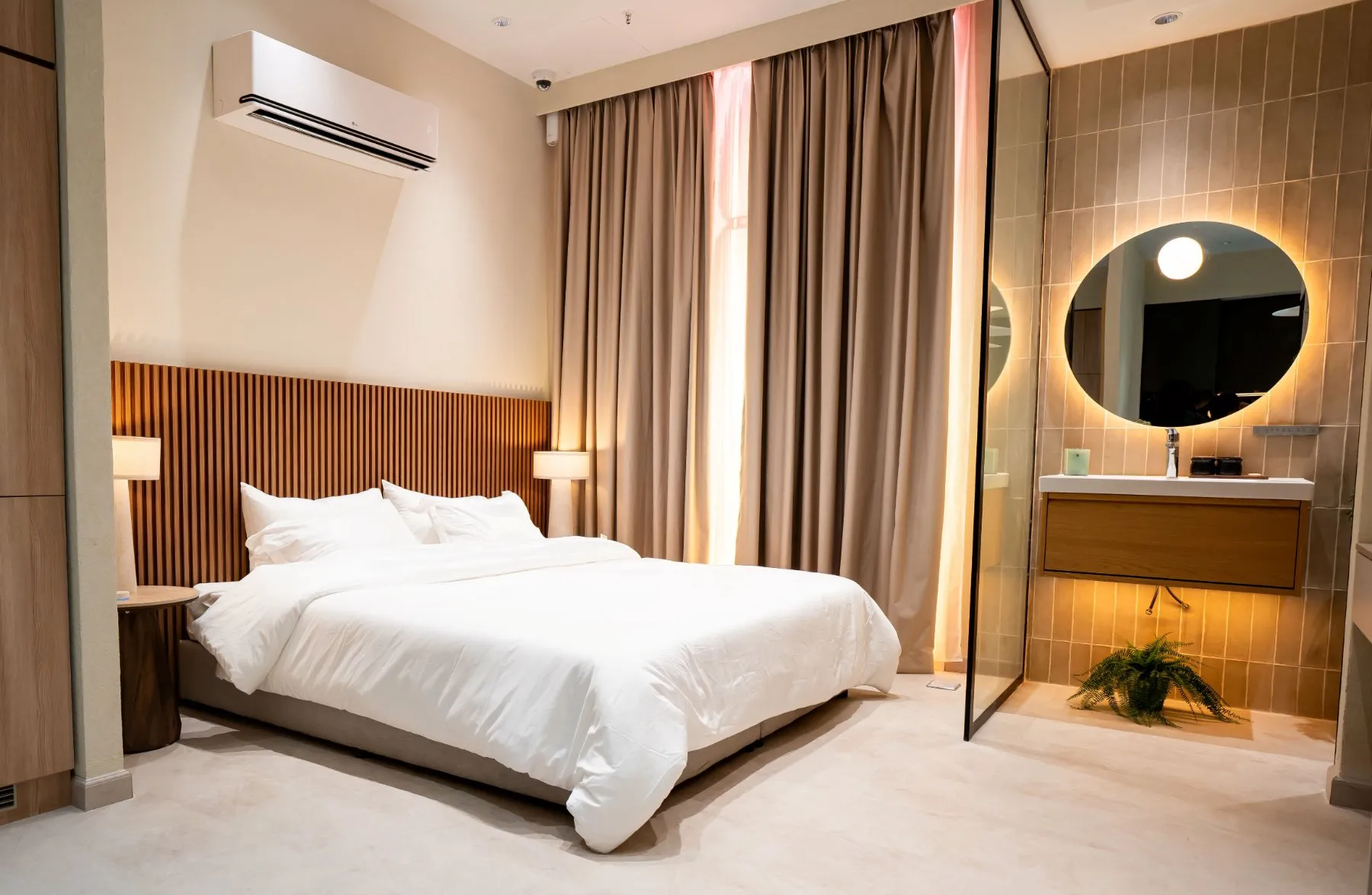 A bedroom setting inside LG’s Riyadh AI Home Experience Zone shows how connected technology can extend into residential and hospitality-style spaces.
This is where “smart hospitality” starts to move beyond digital check-in and mobile apps. Those tools still matter, but they are now only one part of a wider expectation around connected living.
Why developers and operators should care
For hospitality operators, integrated technology can create operational advantages. It can simplify control, improve standardisation and reduce the friction that comes from managing multiple disconnected systems. For developers, it can help differentiate a project in a market where the quality of the physical product is increasingly tied to the quality of the digital experience.
That is especially relevant where residential and hospitality concepts are blending. Serviced residences, mixed-use projects and branded homes all rely on the same underlying idea: that experience can be designed, not just marketed.
The more a developer can buy an ecosystem as a single stack, the more attractive it may become operationally. A unified approach can reduce complexity and make integration easier at the project stage rather than after handover. It also creates a clearer story for buyers and investors who want to understand what makes a development different.
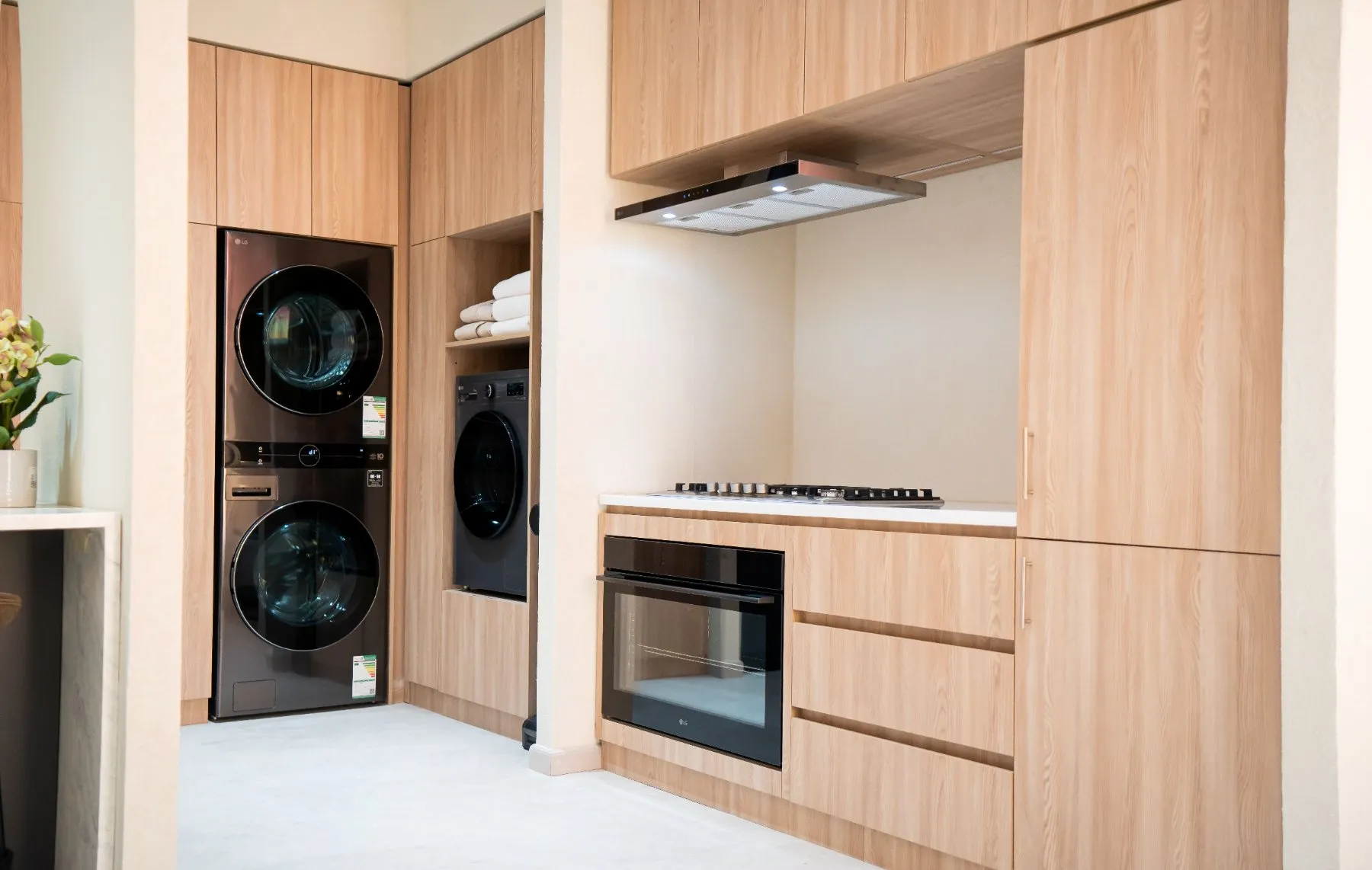 Built-in appliances at LG’s Riyadh experience space illustrate how smart-home technology can be incorporated into a development from the design stage.
The sustainability case is part of the story
The sustainability angle should not be overlooked.
LG’s proposition is not just about convenience. Schneider Electric’s integration brings energy management directly into the smart-living proposition.
“optimize energy consumption without compromising on comfort or convenience.”
— Hossam Swailam, Head of Offer & Channel Marketing, Schneider Electric
In hospitality and real estate, that makes the business case more tangible because the technology is doing more than creating a premium feel.
In other words, the pitch is not simply that a building feels smarter. It is that it may operate better.
That matters because energy management is becoming inseparable from the design of premium hospitality and residential assets. Guests and residents expect comfort, but operators also have to think about consumption, costs and long-term performance. A system that can balance those priorities is more than a lifestyle upgrade. It is part of the operating model.
The questions that still need answers
LG highlights encryption and secure data storage, which is important. But whenever technology becomes more embedded in the built environment, new questions follow. Privacy is one of the biggest. Security is another. And then there is the more human question of how much behavioural learning and automated personalization people are actually comfortable with.
There is a difference between a system that makes a stay easier and one that feels too aware of how people behave. For some guests and residents, that will feel premium. For others, it may feel intrusive.
That tension will shape how quickly integrated smart living is adopted in hospitality. The strongest propositions will probably be the ones that feel effortless without becoming overbearing.
The bigger shift
The bigger shift in Riyadh’s evolving technology and property landscape is from standalone smart products to integrated environments.
The next competitive advantage may not come from another app or interface. It may come from how well developers and operators design the underlying ecosystem that makes a property feel responsive, efficient and coherent.
That is why LG’s Riyadh showcase feels relevant beyond the showroom. It offers a glimpse of how connected living may be reframed in Saudi Arabia: not as a consumer add-on, but as a foundational part of the hospitality and real estate proposition.