Ras Al Khaimah Is the Stop That Could Make the UAE Yachting Alliance Feel Like a Journey
The new three-emirate alliance was announced in Monaco, but its real promise is closer to home: turning yacht travel into a longer, more varied Gulf experience, with Ras Al Khaimah as the clearest contrast destination.

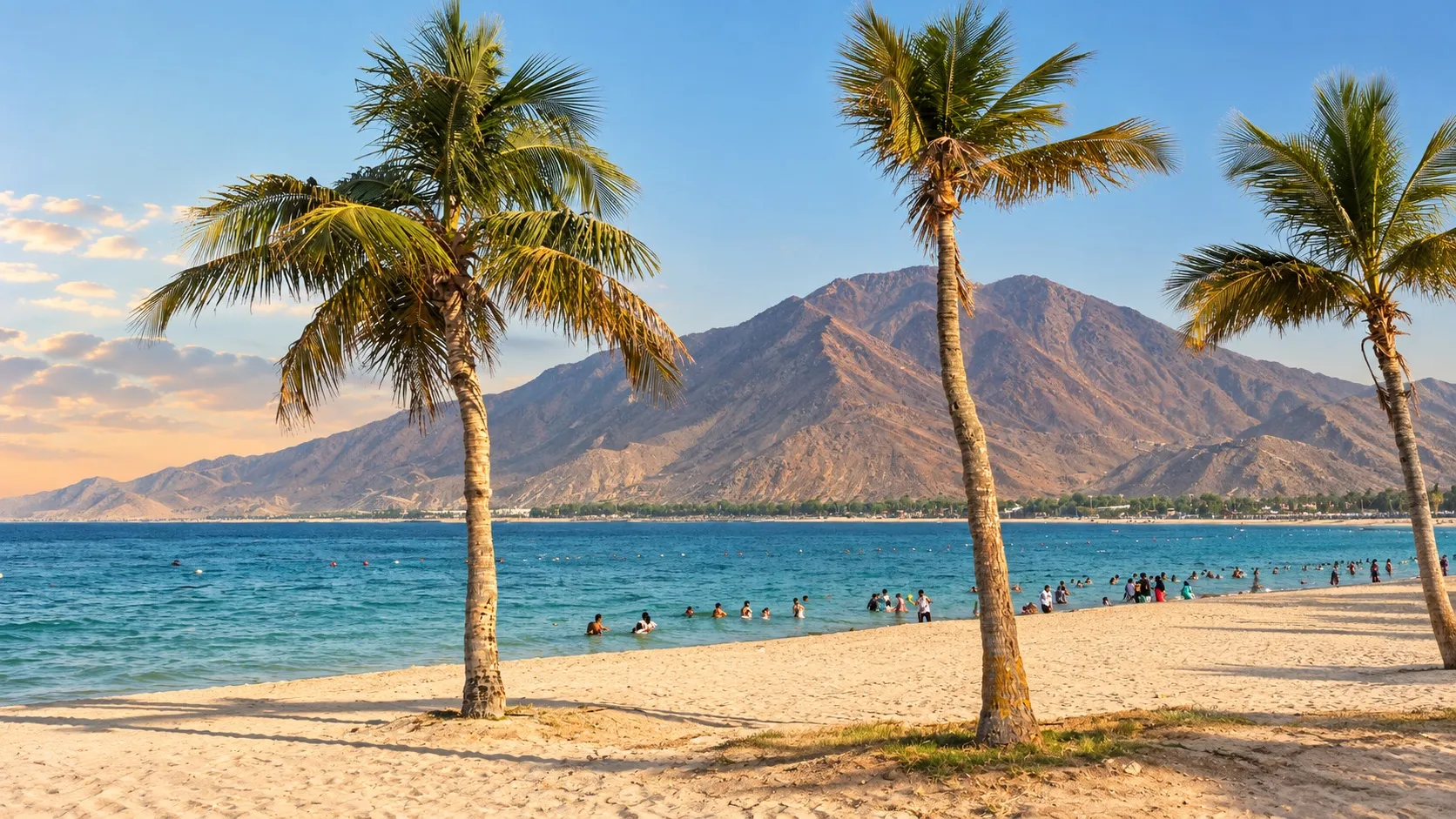
The UAE’s new yachting alliance feels important not because it adds another label to the maritime calendar, but because it frames the country as a connected sailing destination rather than a sequence of separate calls.
The announcement of the initiative sets a clear direction: integrated cruising routes and itineraries, coordinated marketing, yacht-show participation and a push for smoother processes for visiting superyachts. Signed by the Department of Culture and Tourism – Abu Dhabi, the Dubai Department of Economy and Tourism and the Ras Al Khaimah Tourism Development Authority at the opening of the Monaco Yacht Show in late September 2026, the effort also builds on a simplified protocol introduced by Abu Dhabi and Dubai at the start of 2026, which recognised either emirate’s sailing permits between the two and removed duplicate local entry and exit procedures. No official routes, implementation dates or further regulatory changes have yet been announced.
What interests me most, though, is not the policy language. It is the destination logic behind it.
Why Ras Al Khaimah changes the story
Dubai already has the established marinas and waterfront energy that yacht guests expect. Abu Dhabi adds islands and a cultural depth that can extend a voyage beyond the quay. Ras Al Khaimah brings something different again: a coastline, mountains and nature-led experiences that create a stronger sense of place.
That matters because luxury travel is increasingly about variety, not just exclusivity. A yacht guest can find a marina in many places. Fewer places can offer the feeling of stepping off the water and into a landscape where the sea and the mountains meet so clearly. Ras Al Khaimah’s geography — including its 68 kilometres of coastline, the Hajar Mountains, mangroves and outdoor activities — gives it a distinct position in the story. Visit Ras Al Khaimah’s geography page
That is what can make a call there memorable.
I think the real opportunity is not to ask Ras Al Khaimah to imitate Dubai or Abu Dhabi, but to lean into being the destination that changes the rhythm of the trip.
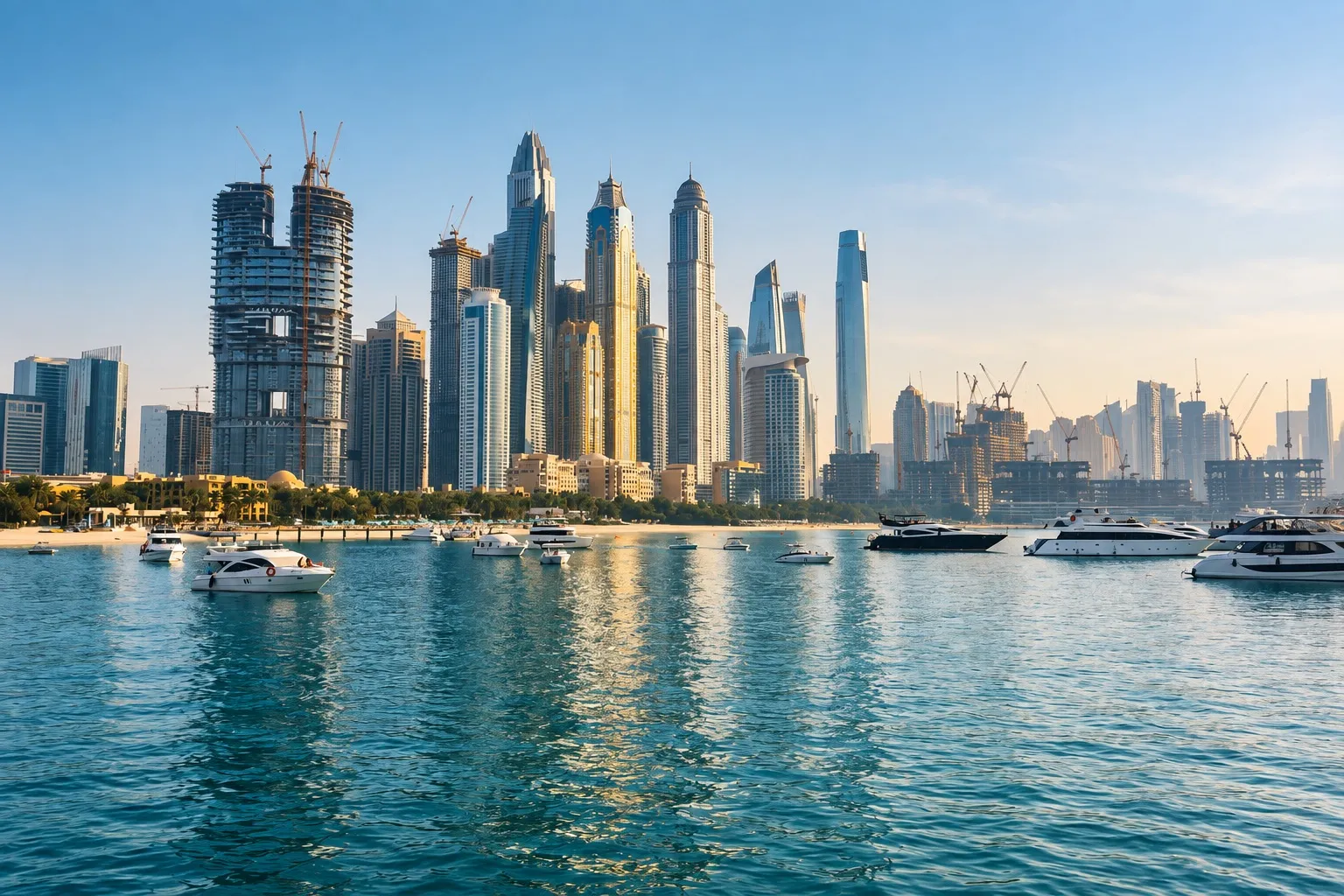 Dubai supplies the established marina energy in a route built on contrast. Edited photograph: Nejc Soklič / Unsplash.
From marina stop to contrast stay
In practical terms, a yacht itinerary becomes more compelling when a port of call offers a reason to stay longer ashore. Ras Al Khaimah can do that in a way a pure marina destination often cannot.
A guest could plausibly step off the water and use the destination for a mountain sunrise, a hike, a mountain biking outing, a zipline experience, mangrove kayaking or a heritage-focused visit. None of that is about overpromising a packaged route or a fixed product. It is about the range of experiences the destination can support.
That range matters for a simple reason: the best yacht journeys often create a pattern of motion and pause. Water for the journey. Land for the reset. A destination that can offer both, and do so in a visibly different setting from the rest of the route, has a stronger chance of encouraging a two- or three-night stay rather than just a brief technical stop.
For charter planners, the key point is to stay practical. Until routes and implementation details are announced, they should verify permits, berthing, transfers and activity availability directly rather than assume a seamless package. The concept is promising, but the operational detail still needs confirmation on the ground.
That is why Ras Al Khaimah may be the most strategically interesting part of the story.
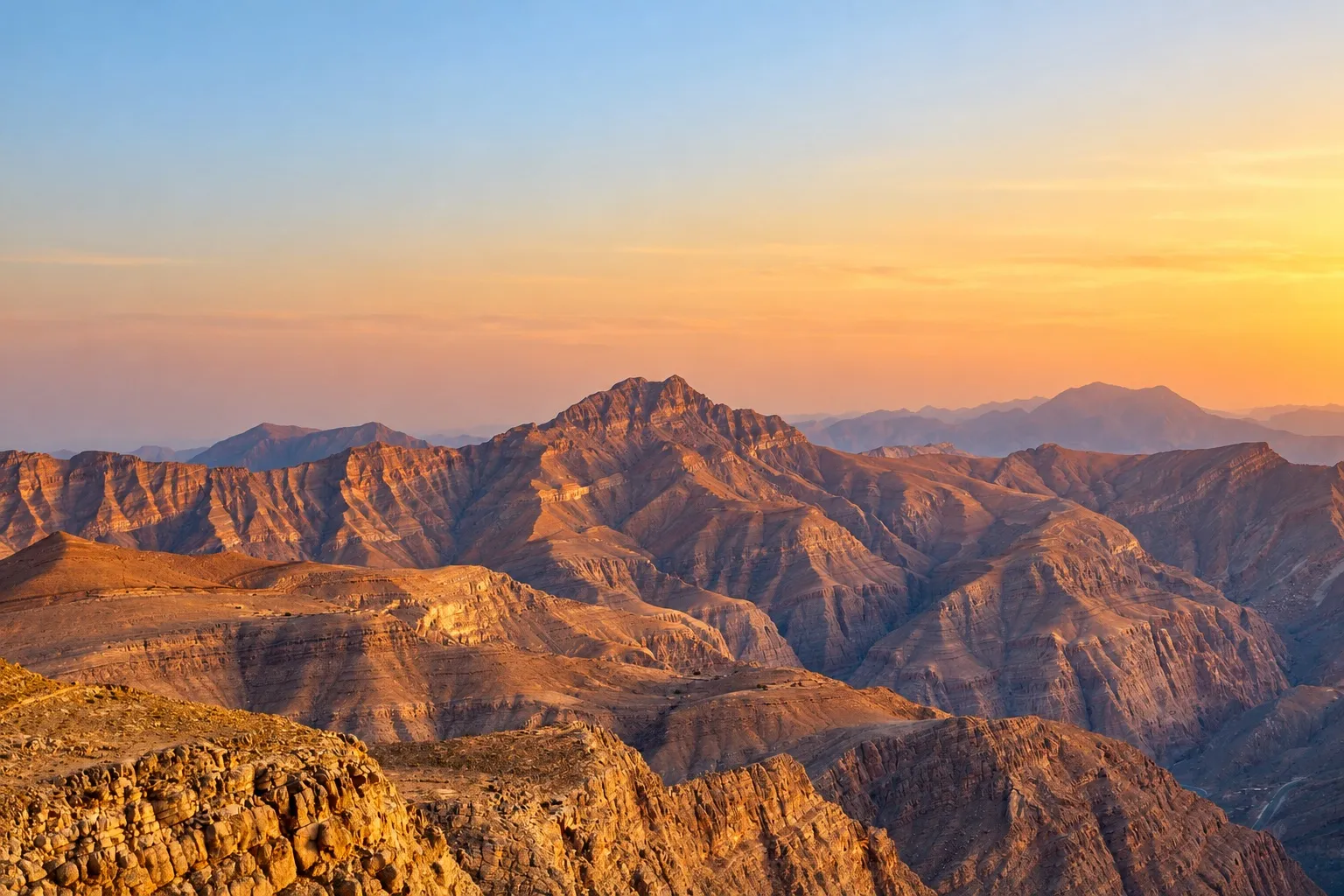 The Hajar Mountains give a yacht itinerary an inland counterpoint. Edited photograph: Giovanni Nehme / Unsplash.
Complementarity is the point
The strongest version of this initiative is not competition between emirates. It is complementarity.
Dubai has long been the Gulf’s reference point for marina infrastructure, waterfront lifestyle and the energy that comes with an established yachting scene. Abu Dhabi brings islands, scale and culture. Ras Al Khaimah adds nature, elevation and a sense of escape.
Viewed together, the three create a more complete visitor proposition than any one emirate can produce alone.
That is especially relevant for the luxury segment, where travellers are often looking for a sequence of experiences rather than a single anchor point. The sailing itself becomes part of the product, but so does the movement between urban waterfronts, island settings and mountain-backed coastlines. The more distinct those stops feel from one another, the more the voyage feels like a journey.
Why this matters beyond yachting
I also think the initiative hints at a broader shift in how the UAE may market destination travel in the future.
For years, the region’s strength has often been presented through scale: the scale of the infrastructure, the ambition of the developments and the reach of the events calendar. That still matters. But luxury travellers are also looking for specificity. They want to understand what one place offers that another does not.
Ras Al Khaimah’s answer is increasingly clear. It is not trying to be a pure waterfront city. It is a place where the coast meets mountains, and where a yacht arrival can become a nature-led stay rather than just a port call.
That distinction is commercially useful because it broadens the audience for maritime travel. It can appeal to yacht charter guests who want a more varied itinerary, to high-end travellers looking for active experiences, and to tourism professionals thinking about how to lengthen stays without forcing a destination into a template that does not fit.
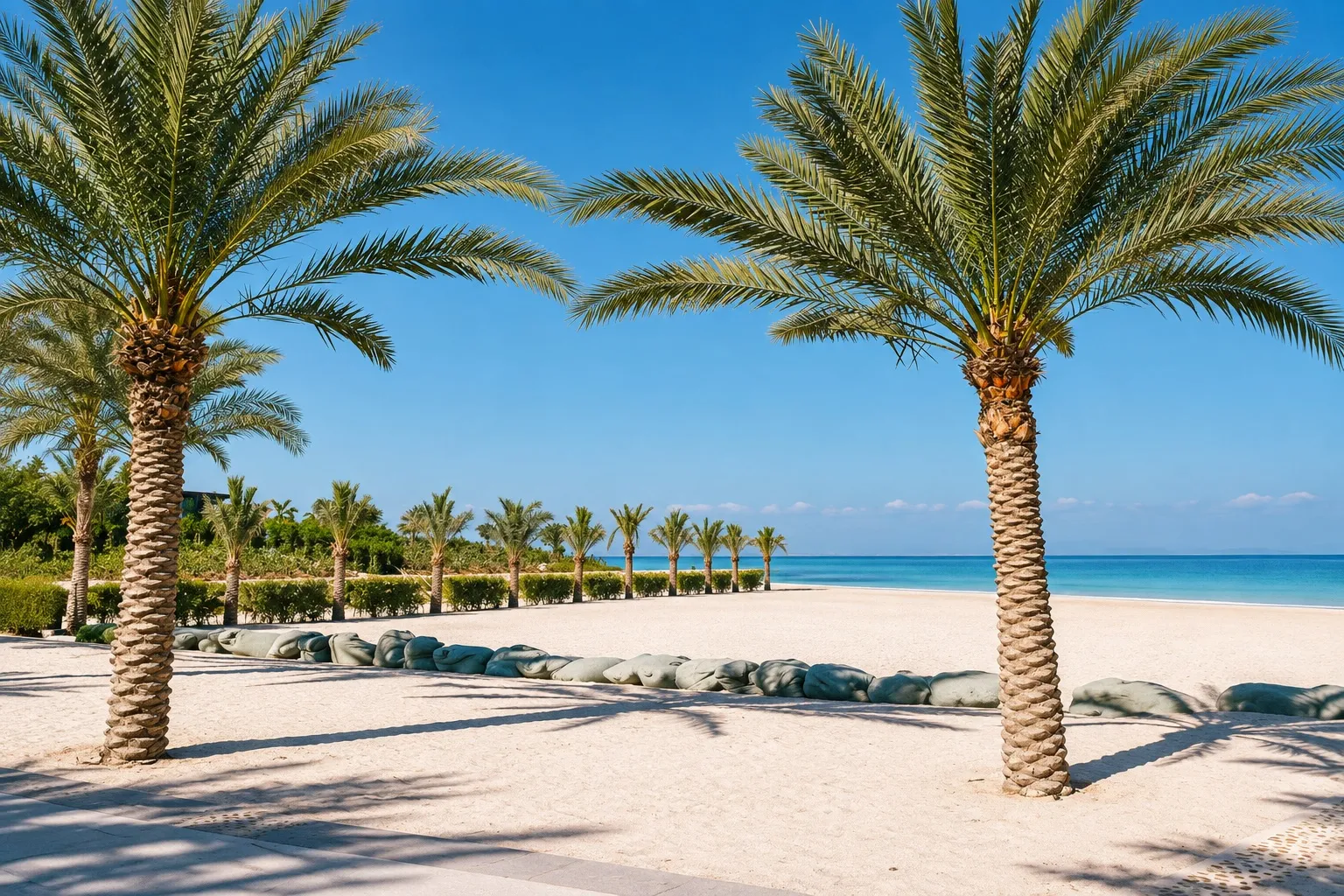 RAK’s appeal is not another urban waterfront but a slower coastal rhythm. Edited photograph: saad alawi / Pexels.
The signal from Monaco
The fact that the initiative was unveiled at the Monaco Yacht Show is also telling. Monaco is one of the industry’s most visible stages, which makes it a logical place to present a proposition built around premium travel, international visibility and serious maritime ambition.
But the value of the announcement will not come from the venue alone. It will come from whether the concept can make the UAE feel easier to navigate as a yachting destination and more rewarding to experience once guests are ashore.
If that happens, Ras Al Khaimah may emerge as the destination that gives the whole idea shape. Not just another stop. The reason to stay longer.
The bigger prize
What I take from this announcement is that the UAE is starting to tell a more connected story about coastal travel.
Abu Dhabi, Dubai and Ras Al Khaimah each bring a different strength. Together, they can offer something stronger than a collection of marinas: a journey with genuine variation.
And in luxury tourism, variation is often what turns convenience into desirability.
Hero photograph: Santhosh Sethumadhavan / Unsplash, edited. Images are illustrative destination photographs; they do not document the Alliance signing or a specific yacht itinerary.