Riyadh’s Silent Airport expands as KKIA resets its terminals
Terminals 1 and 2 have joined Terminal 5 in reducing hall-wide announcements. For passengers, that changes how to follow a flight; for Riyadh, it sits alongside a much larger capacity plan.

The loudspeaker is no longer the default
Riyadh’s King Khalid International Airport began its Silent Airport project in Terminal 5 on 18 August 2026. On 28 September, the Arabic news outlet Slaati reported Phase 2 in international Terminals 1 and 2. Three terminals now use the quieter approach.
“Silent” needs a careful reading. This is a reduction in routine announcements across the terminal, with voice calls concentrated at departure gates. It does not mean that a traveller will never hear an announcement. Flight screens, the airport website, its WhatsApp service and on-site staff carry more of the day-to-day information.
I think the interesting question is whether that information becomes easier to use as the soundscape gets calmer. A busy concourse can be full of announcements that mean nothing to most people in it. Removing some of that noise has obvious appeal. But the change succeeds only if a passenger can find the right update at the right moment.
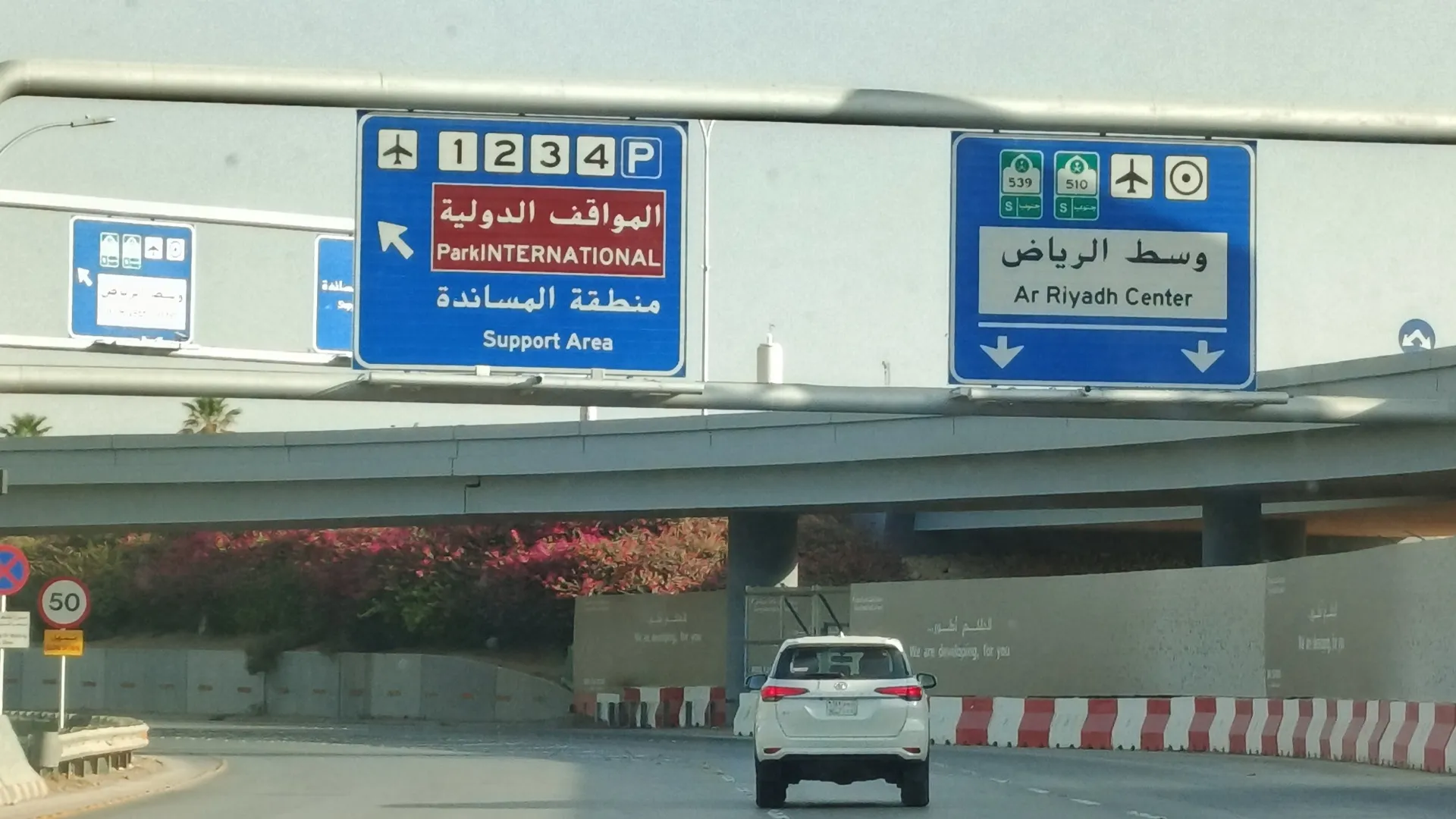 Wayfinding on the approach to KKIA, photographed in 2025. Kharbaan Ghaltaan / Wikimedia Commons; cropped.
What a traveller should do differently
Start with the terminal. After the airport’s February 2026 reshuffle, Terminals 1 and 2 serve international flights by national carriers; Terminals 3 and 4 serve their domestic flights; Terminal 5 serves international flights by foreign carriers. That is the operating pattern, but your airline and booking remain the best way to confirm your own departure terminal.
Once inside a quiet terminal, I would use a simple routine:
- Confirm the terminal and flight number with the airline before setting out.
- Check a flight information screen after entering the departure area, then check again as boarding approaches. Watch for a gate change as well as a time change.
- Keep the airport’s WhatsApp number, 920020090, available for flight and service information. The airport website is another channel.
- If a screen or message is unclear, ask the Ask Me team in the terminal. Do not wait for a hall-wide call to resolve a mismatch.
That advice matters most for someone connecting between flights, travelling with family, or navigating the airport for the first time. It also matters for people who prefer a person to an app. A quieter airport still needs an easy human route to an answer.
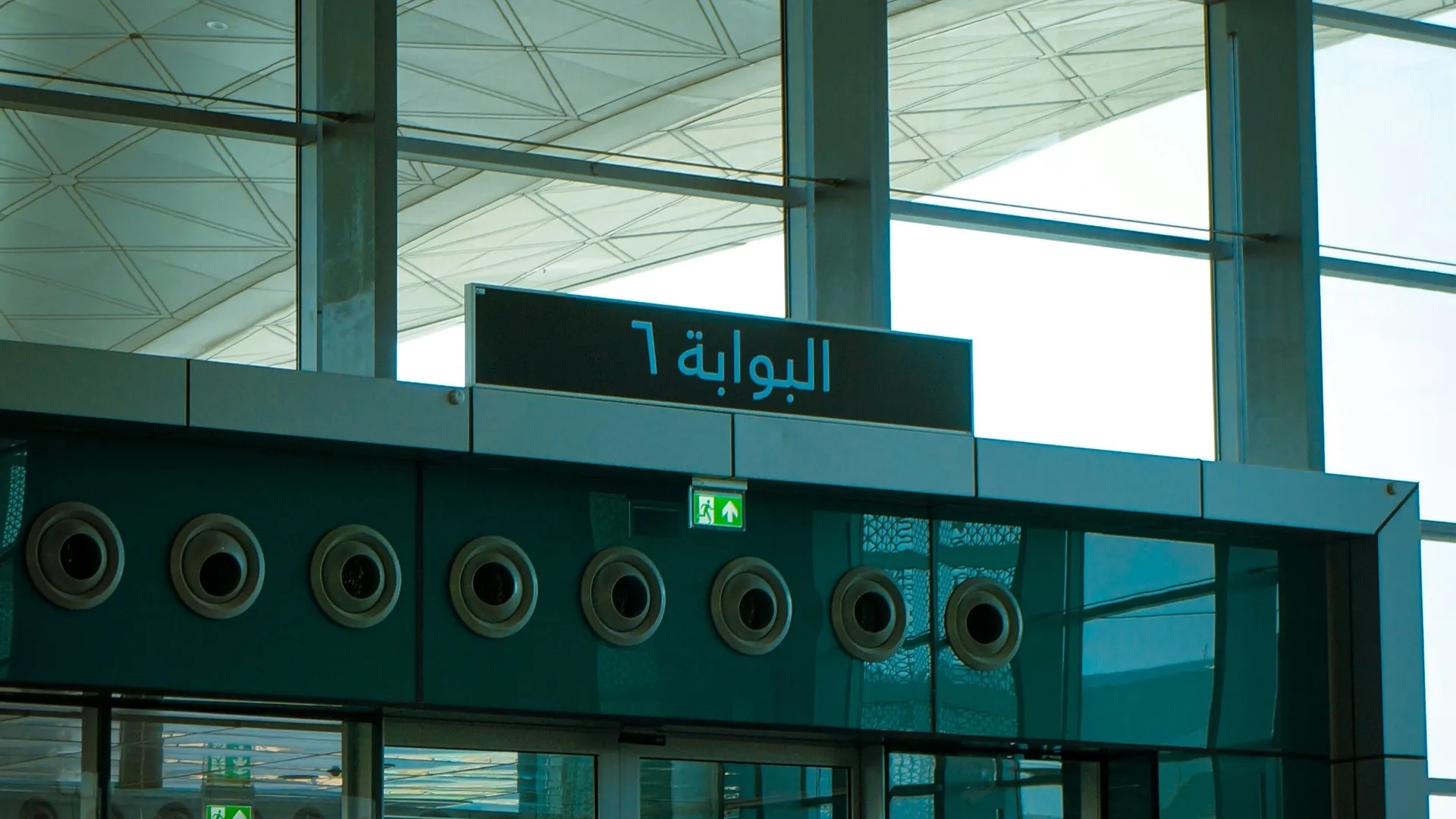 Gate 6 at KKIA. Ahmed Alghali / Unsplash; cropped.
Why the quiet rollout matters as KKIA grows
The quiet-airport rollout is happening alongside a bigger operating change. In KKIA’s February 2026 terminal transition update, the airport said the reallocation was expected to raise annual capacity in Terminals 3 and 4 from 16 million to 25 million passengers. It also set out an airport-wide capacity goal of 56 million by the end of 2026, compared with 42 million in 2025, and a projected 7.5 million annual capacity for transit and connecting passengers.
These figures describe what the airport aims to be able to handle, rather than how many people have travelled through it this year. The useful question is what happens when more passengers move through a terminal while fewer updates come over its loudspeakers. Screens and digital messages need to agree, especially when a gate changes close to boarding. Staff need to be easy to find when they do not.
The terminal reshuffle also makes a connection a two-part navigation problem: confirm the terminal for each flight, then follow the latest gate information inside it. The Silent Airport currently covers Terminals 1, 2 and 5; Terminals 3 and 4 have a different role in the 2026 operating plan. For someone connecting between domestic and international flights, the most helpful upgrade is a consistent journey from the airline’s booking to the airport’s screens, WhatsApp updates and staff guidance. Extra physical capacity only feels useful when that journey works under time pressure.
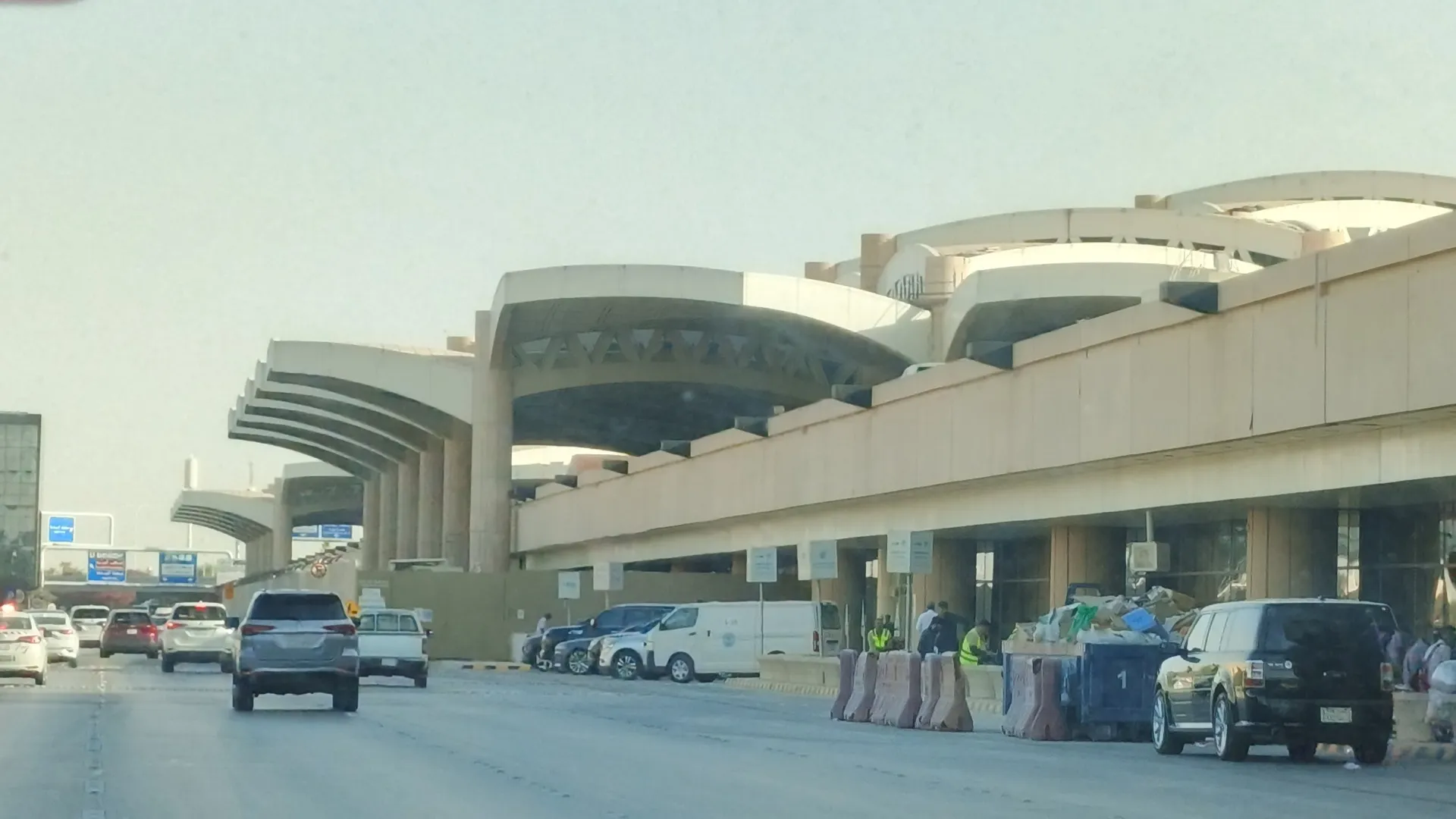 KKIA’s terminal exterior in 2025. Kharbaan Ghaltaan / Wikimedia Commons; cropped.
The real measure is whether people stay informed
I can see why this approach fits Riyadh’s ambitions. A calmer terminal can make waiting easier for someone working between flights or arriving after a long journey. It may also help travellers who find overlapping announcements stressful. But neither benefit has been measured here, and “silent” is not automatically accessible.
Screens must be easy to spot and read. Gate changes must reach passengers promptly. The airport’s WhatsApp channel has to be useful when a traveller needs an answer, and staff must be visible to people who cannot or do not want to use a phone. Pilgrims, older passengers and first-time international travellers are among the people for whom those details can matter most.
The relationship between the quiet rollout and the capacity programme is an operational one, not proof that one caused the other. KKIA is asking its existing terminals to handle a more ambitious flow while changing how they communicate with passengers. The result will be judged in ordinary moments: a gate found without confusion, a connection made without a rushed detour, and a question answered before it becomes a problem.
That is what I will watch as the Silent Airport expands: whether Riyadh can make a busier airport feel easier to navigate.
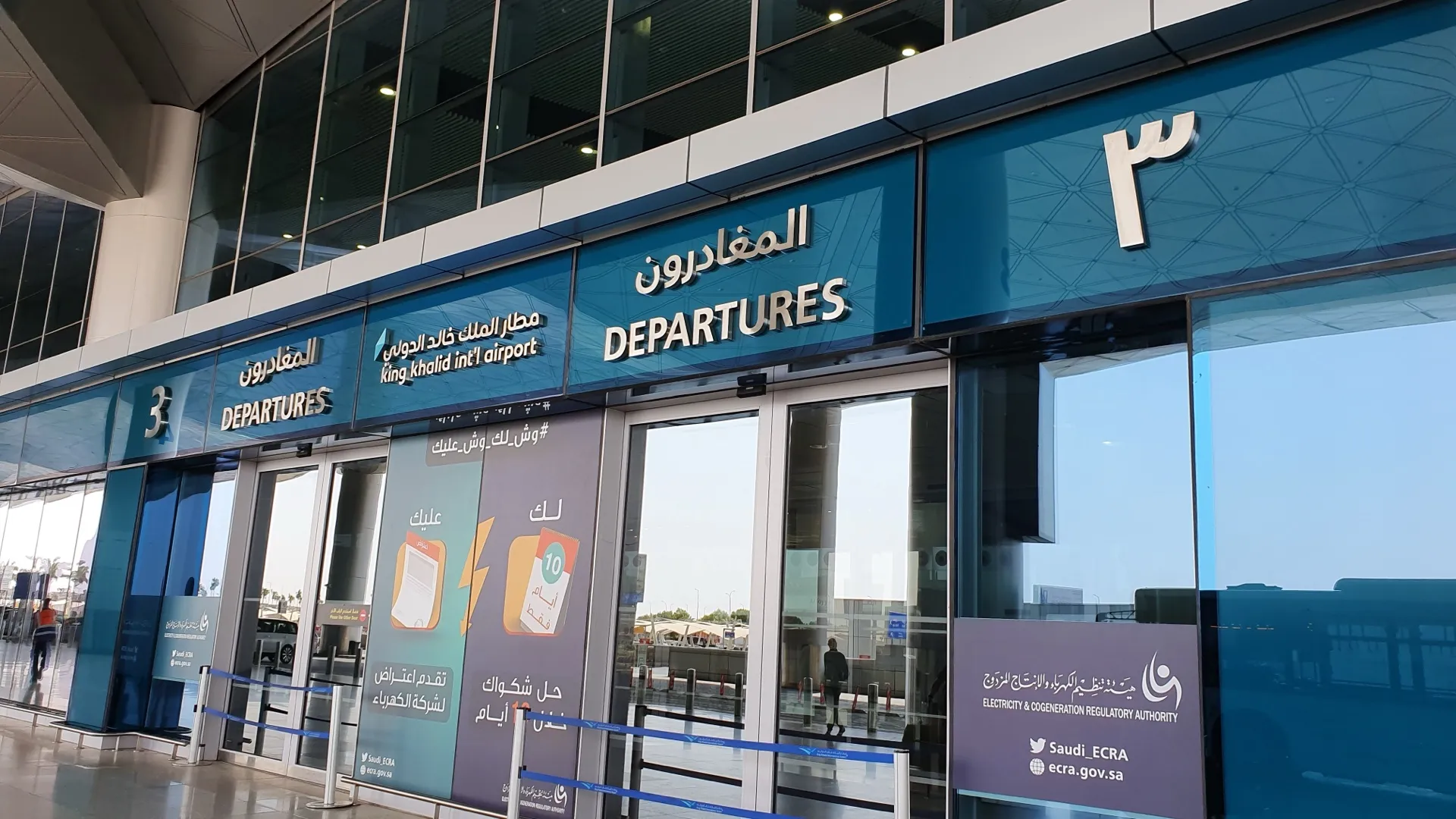
Hero photograph: KKIA Terminal 3 departures entrance, Kskhh / Wikimedia Commons, 2019; cropped, CC BY-SA 3.0. The two other Wikimedia photographs are shared under CC BY-SA 4.0.